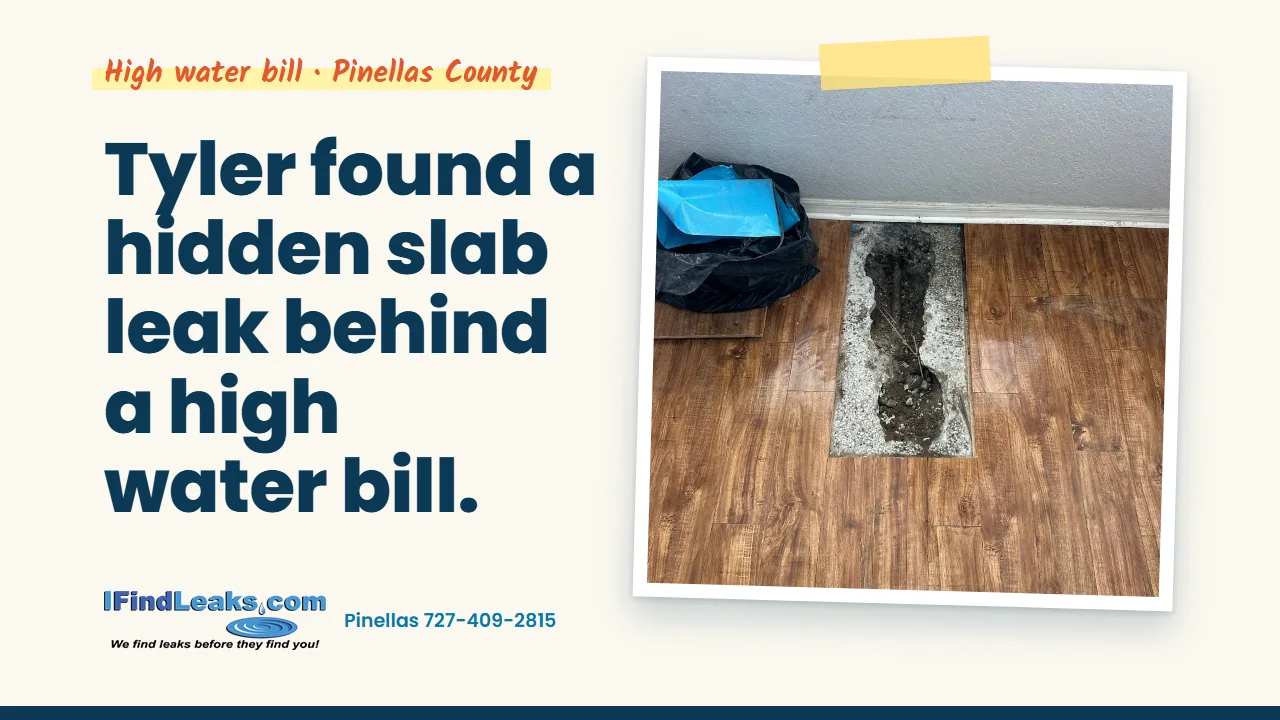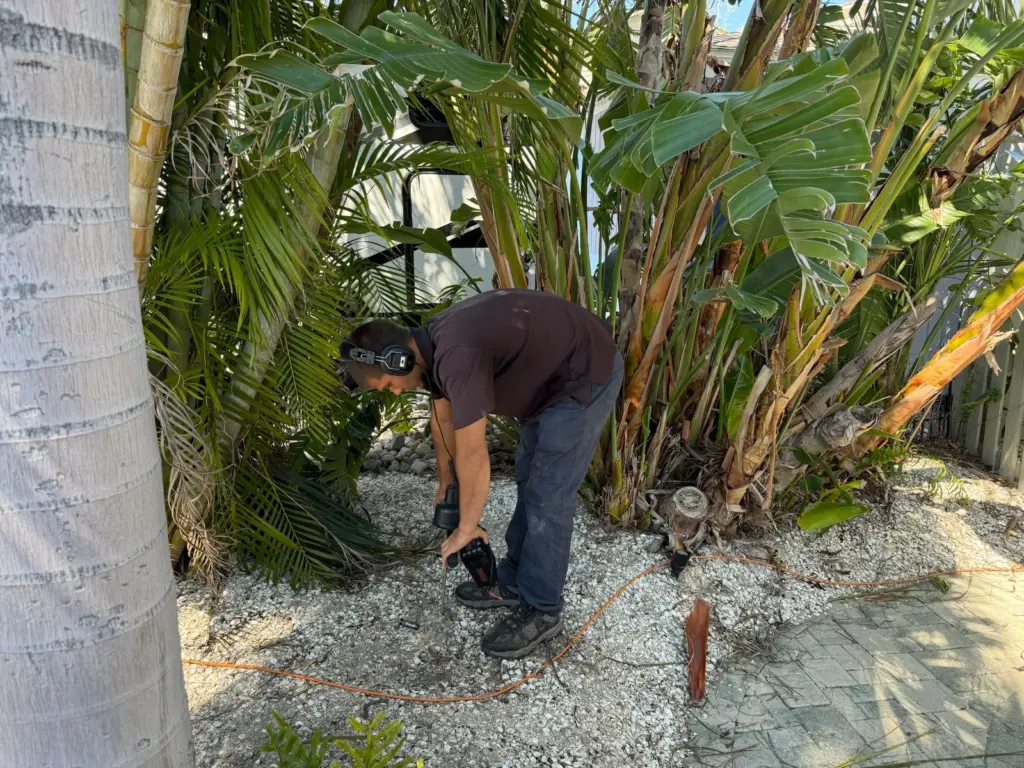
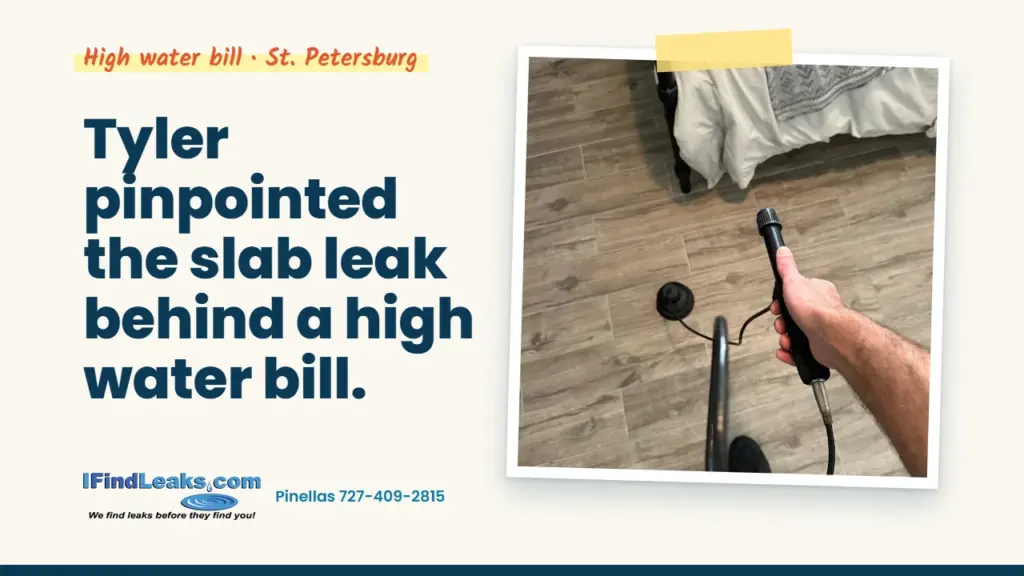
A sudden high water bill in St. Petersburg is rarely “just the city.” In many cases, it is a hidden water leak—often an underground leak or slab leak—silently running day and night. When that happens, the damage you can’t see is usually the most expensive.
This job is a great example of how professional leak detection prevents unnecessary demolition. Tyler, one of our experienced technicians at iFindLeaks.com, followed a step-by-step process to isolate the leak location accurately—so the home didn’t get torn apart by guesswork.
If you are in St. Petersburg dealing with a high-water bill, unexplained moisture, warm spots on the floor, or suspected slab leaks, this is exactly how a proper investigation should look.
Why St. Petersburg High Water Bills Often Point to Slab Leaks and Underground Leaks
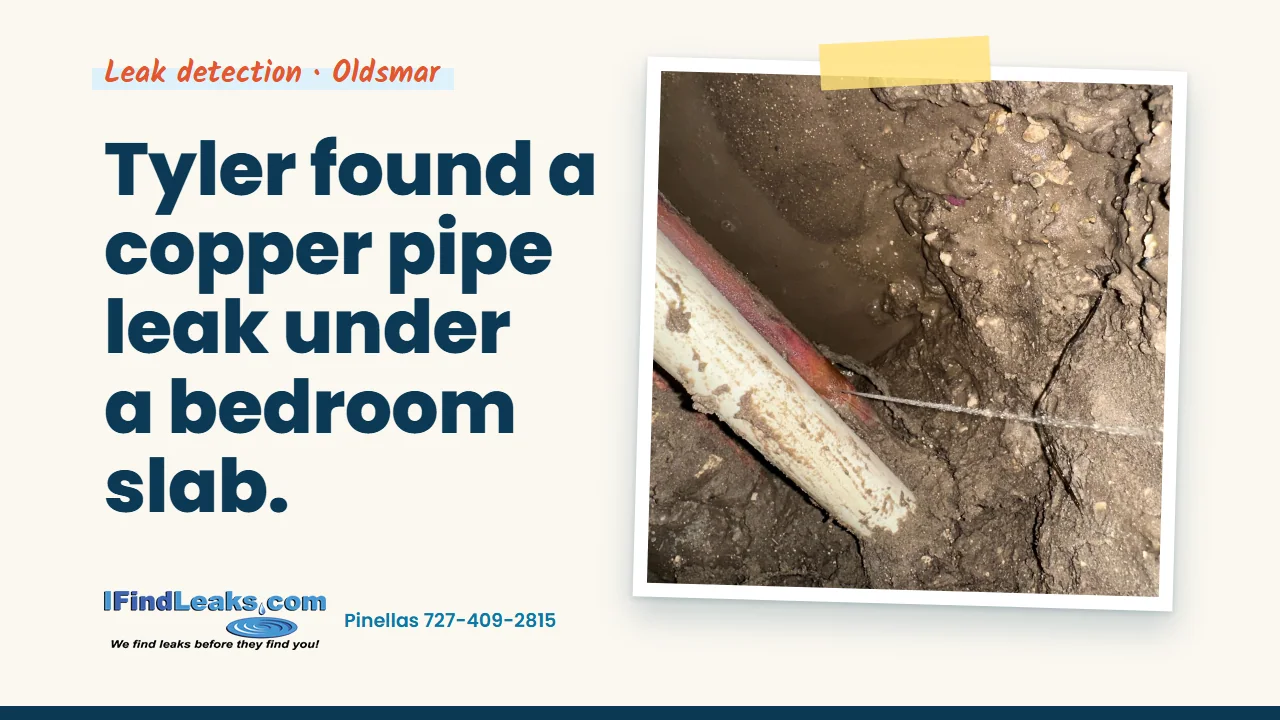
In Florida, many homes have plumbing routed through or beneath the slab. When a supply line develops a failure—often involving materials like copper piping—water can travel under flooring, behind walls, or into the soil long before any visible damage appears. That is why slab leak detection and underground leak detection require specialized tools, not assumptions.
A key point: moisture patterns and “hot spots” can show where water is moving, but they do not always show the exact place the pipe is leaking. That’s why we use multiple methods to confirm the true source before anyone opens a floor or breaks concrete.
Step 1: Non-Invasive Infrared Scan to Rule Out Areas
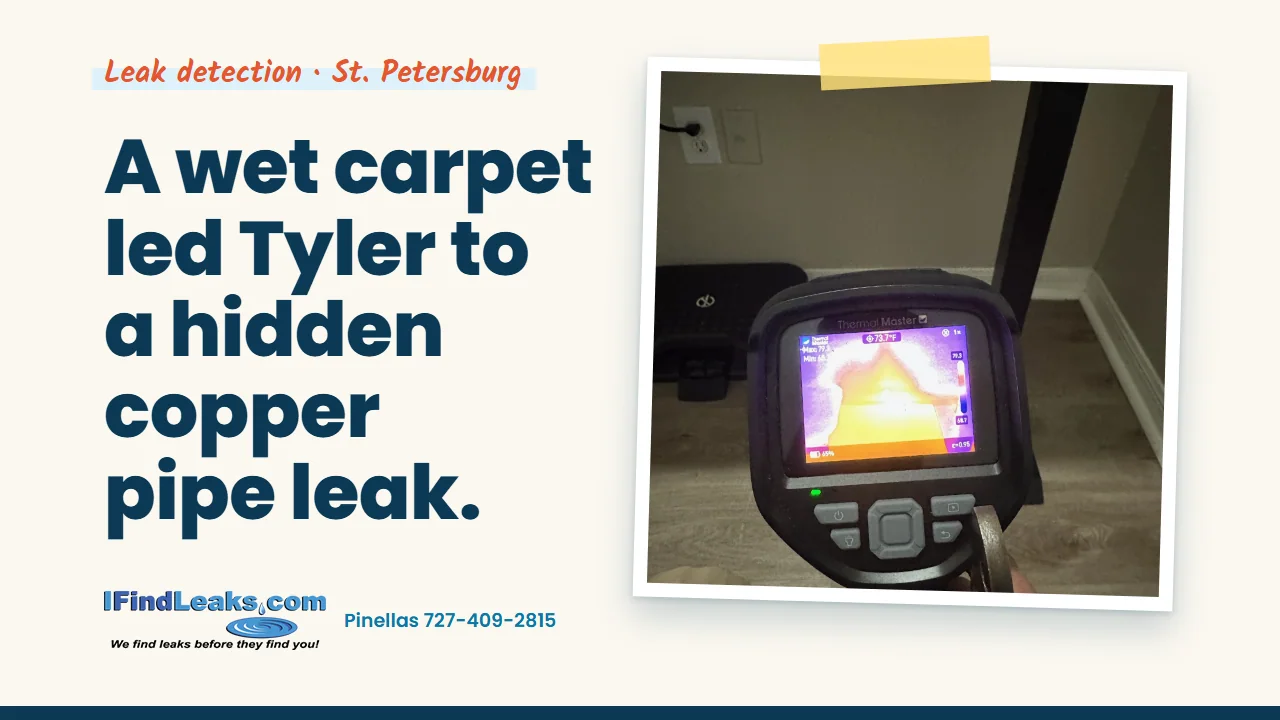
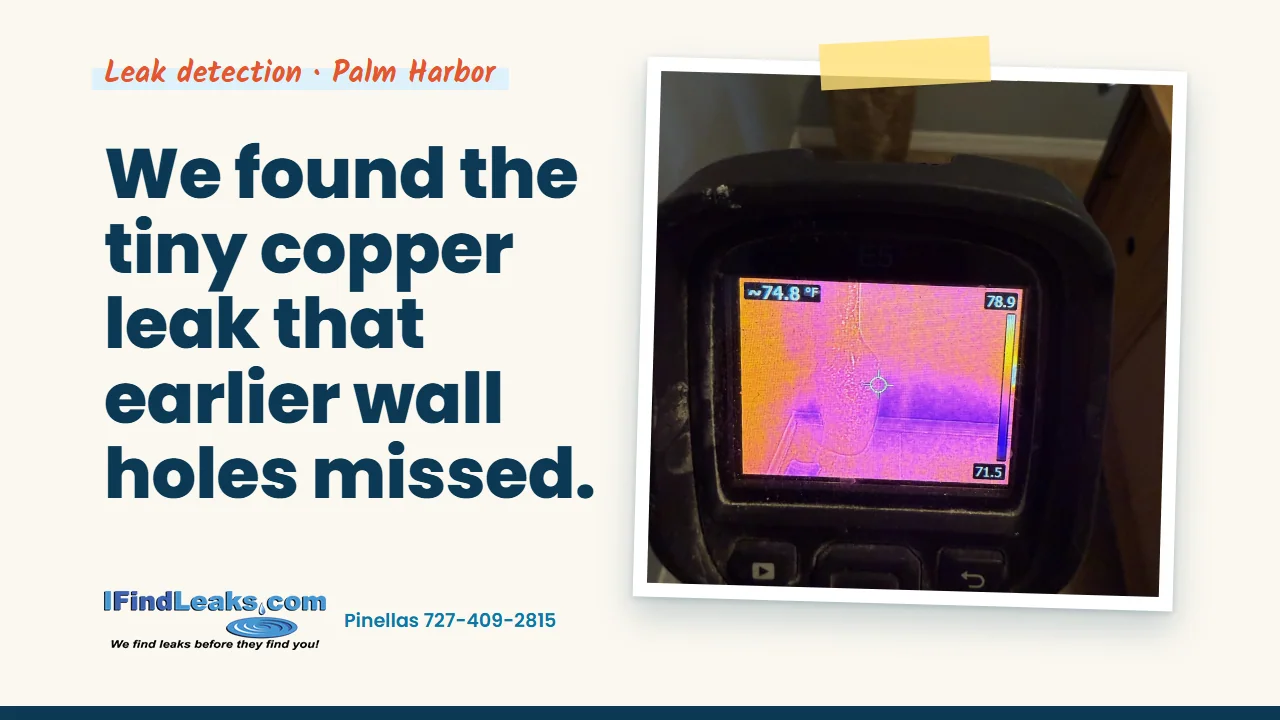
Tyler began with a non-invasive infrared scan. In this first pass, the thermal image shows mostly cooler tones—nothing indicating a clear leak signature in that part of the room. This matters because effective leak detection is as much about ruling out areas as it is about finding the right one.
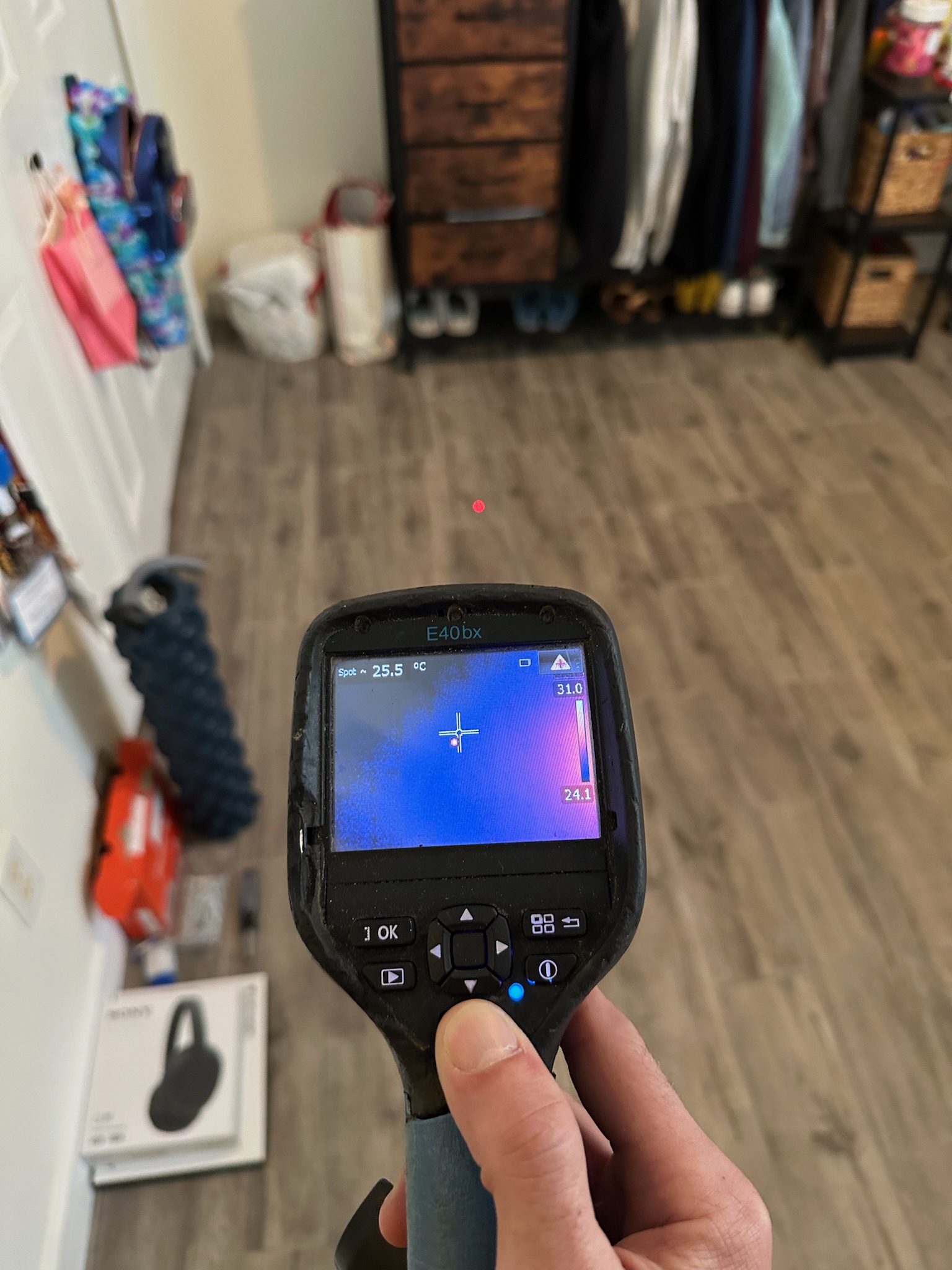
Infrared thermal imaging helps us identify temperature differentials that may correlate with moisture or plumbing activity beneath the surface—without damaging the home.
Step 2: A Thermal “Hot Spot” Appears Near the Desk Area
As Tyler moved the scan toward another section of the room near a desk, the camera began showing a brighter thermal pattern (white and red). That shift tells us there is something worth investigating below the floor—an area of interest consistent with possible moisture movement or plumbing influence.
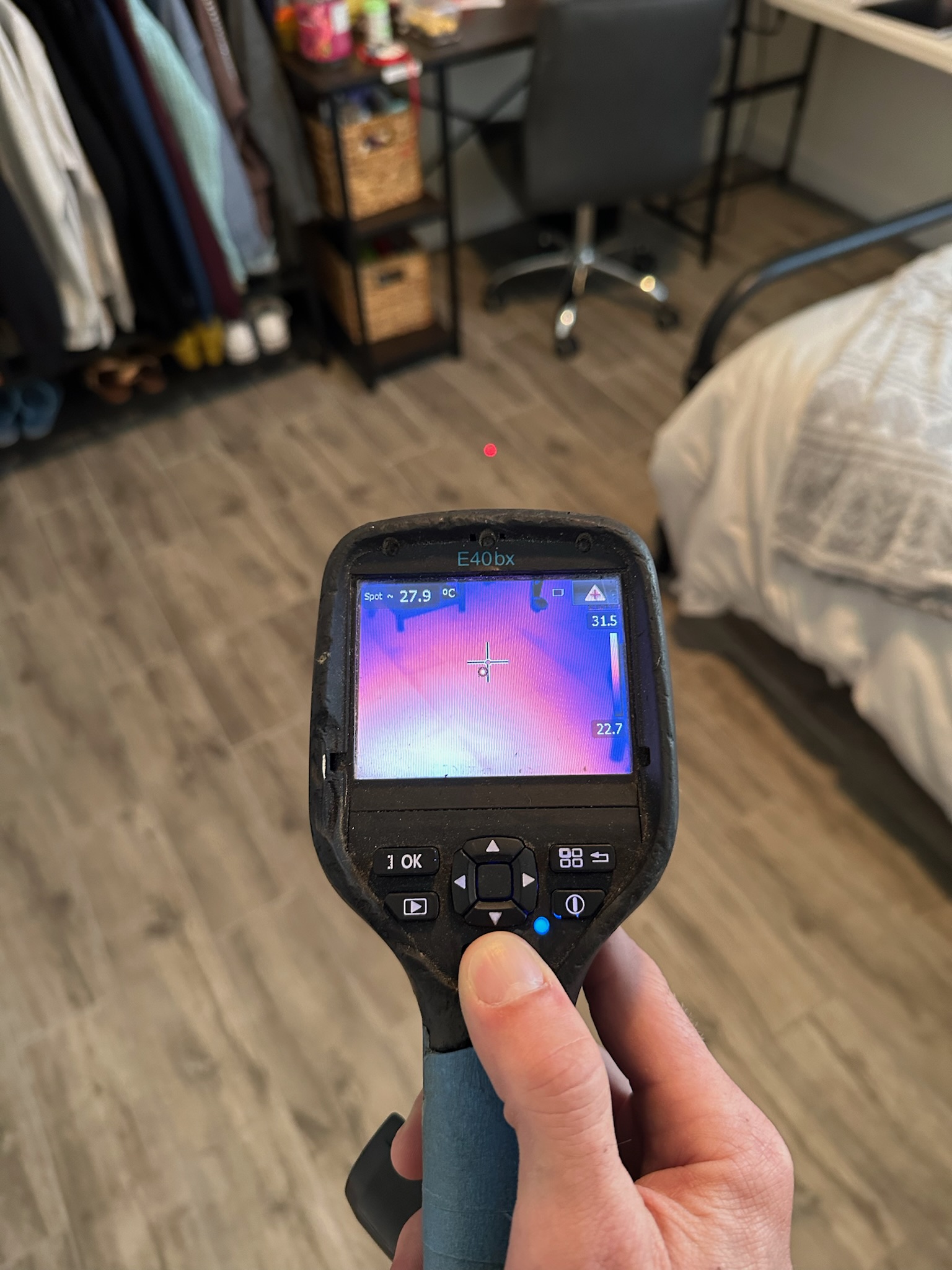
At this stage, we do not guess or cut. We gather evidence, tighten the search zone, and move to confirmation tools that can pinpoint the true leak source.
Step 3: Narrowing to a Localized Pattern Consistent With a Possible Slab Leak
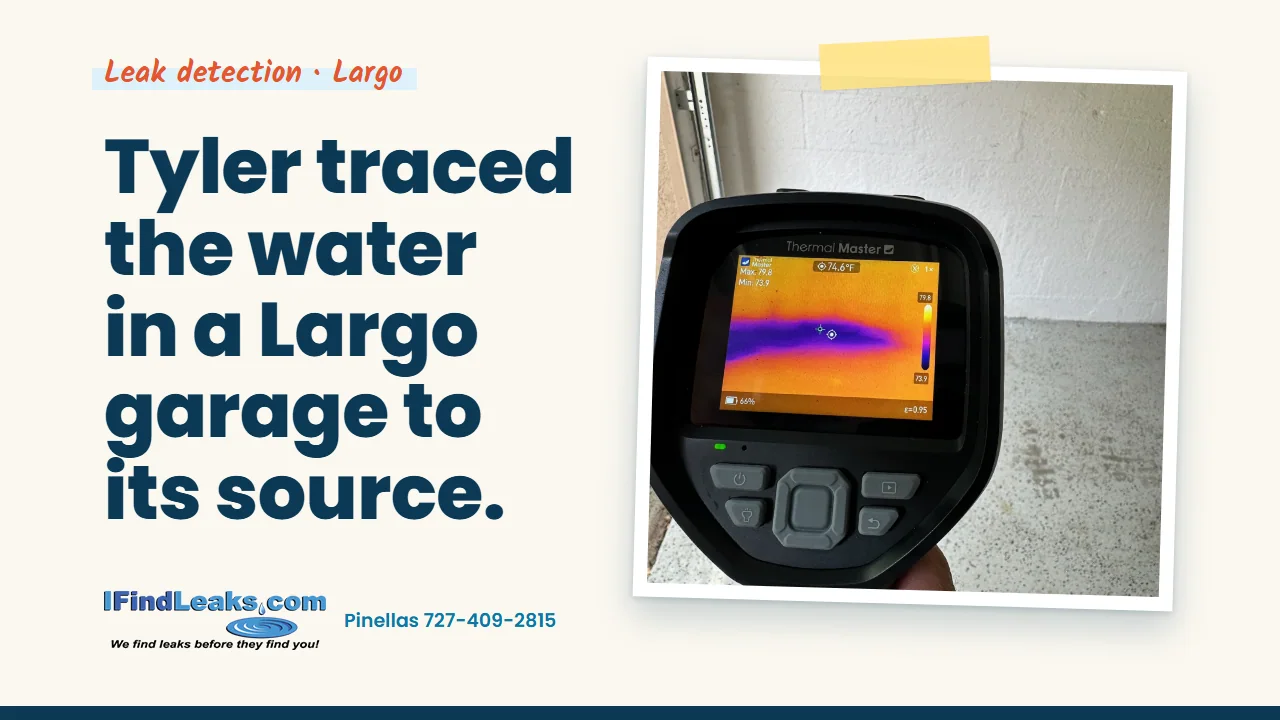
As Tyler honed in, the thermal signature became more concentrated: a defined hot spot with warmer tones at the center and cooler tones around it. That localized contrast is often what we see when investigating suspected slab leaks or underground leaks, especially when the customer’s primary symptom is a high water bill in St. Petersburg.
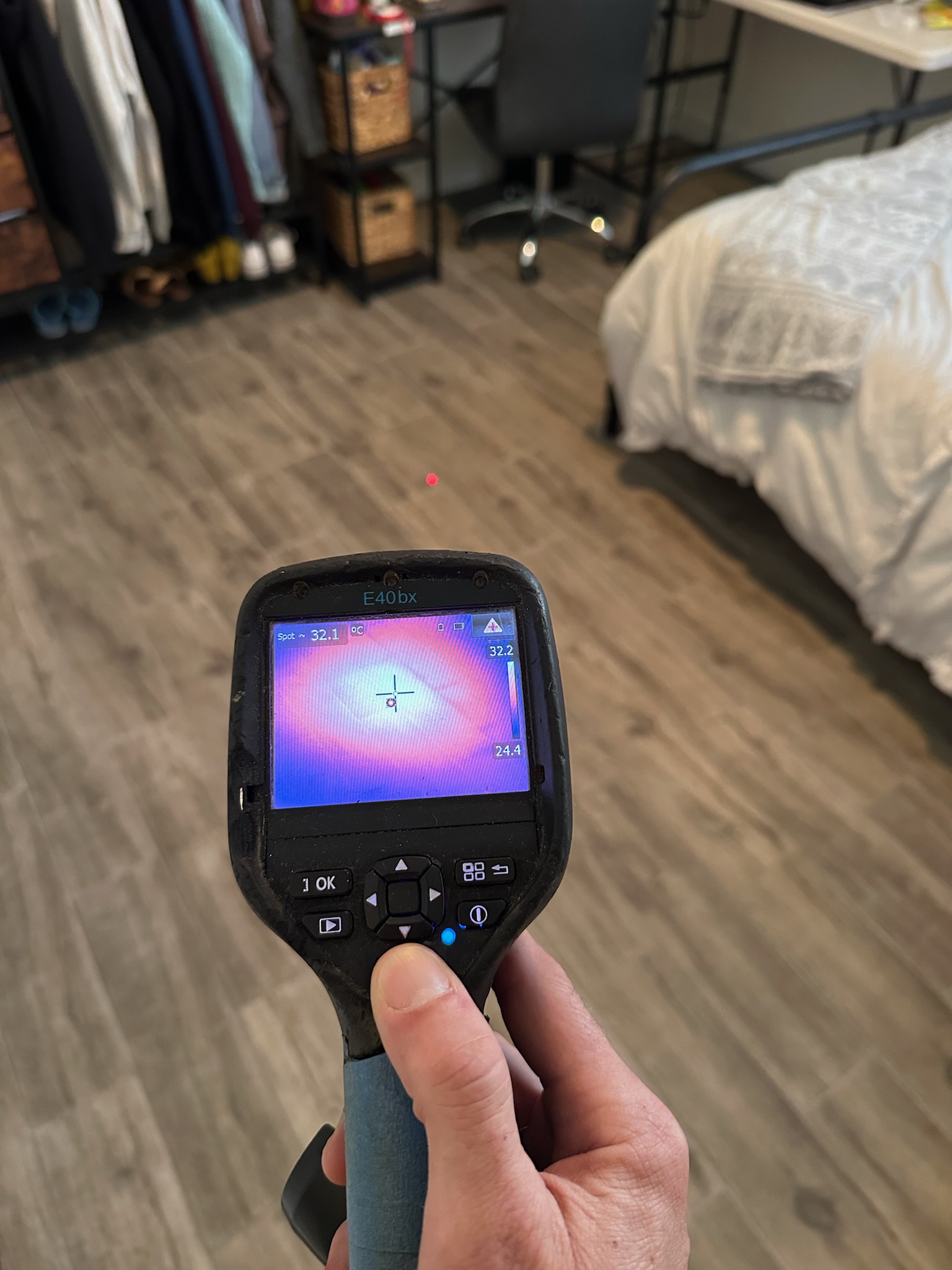
Infrared is powerful, but it is only one part of professional leak detection. The next step is confirming the exact leak point using acoustic testing.
Step 4: Acoustic Leak Detection to Pinpoint the Exact Leak Location
When water escapes from a pressurized pipe, it produces a distinct sound profile. Tyler used acoustical leak detection equipment to listen for that frequency and narrow down where the pipe is actually leaking. This is critical because moisture can spread away from the leak source—especially under flooring and through slab pathways.
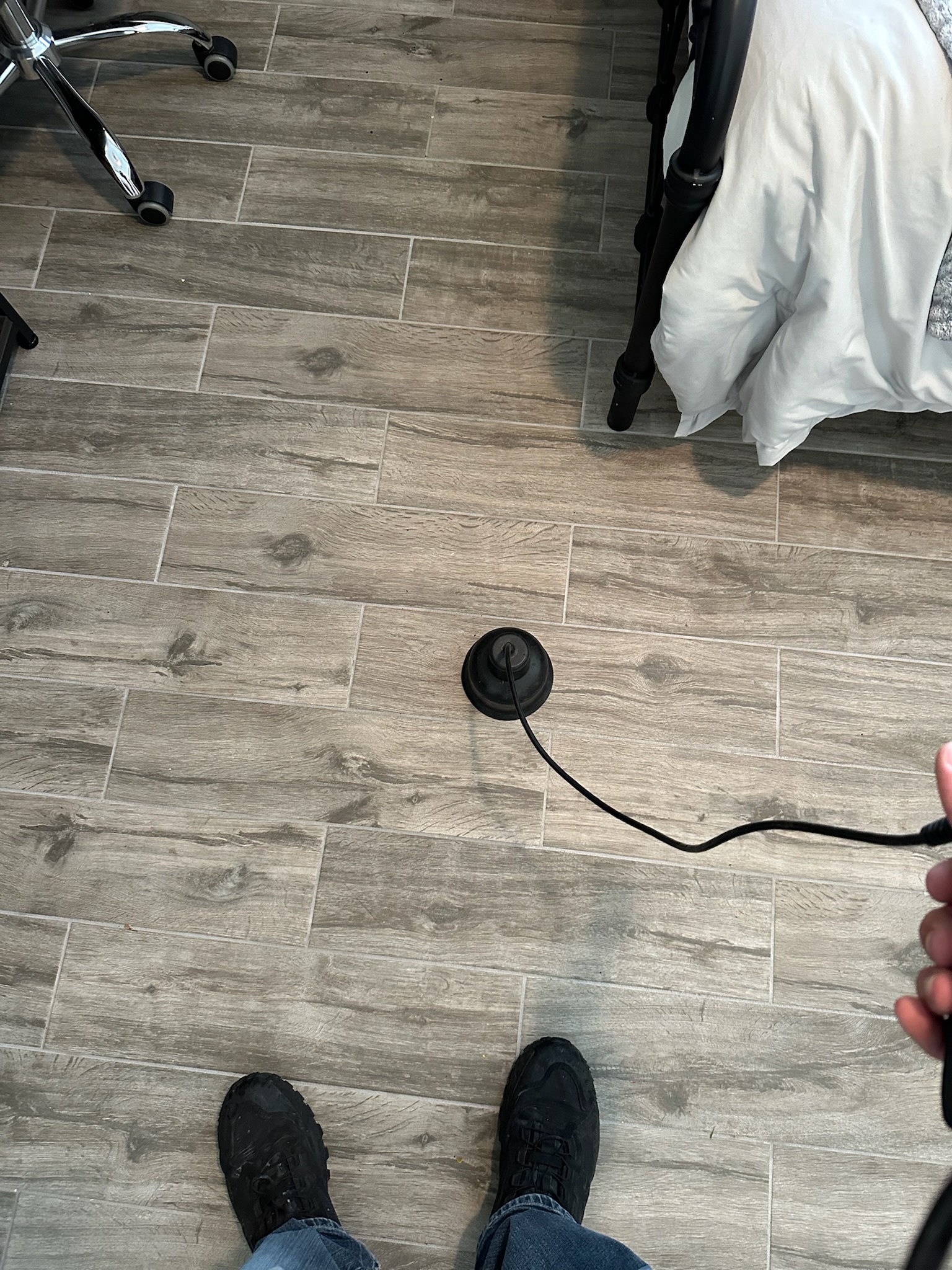
This step is what separates high-quality slab leak detection from a contractor “chasing water” with unnecessary holes and expensive exploratory demolition.
Step 5: Fisher Acoustic Equipment Refines the Target Area
Tyler continued refining the exact location using a Fisher acoustic leak detection machine. This tightens the target to the most accurate point possible, giving a plumber a clear repair zone and protecting the home from excessive damage.
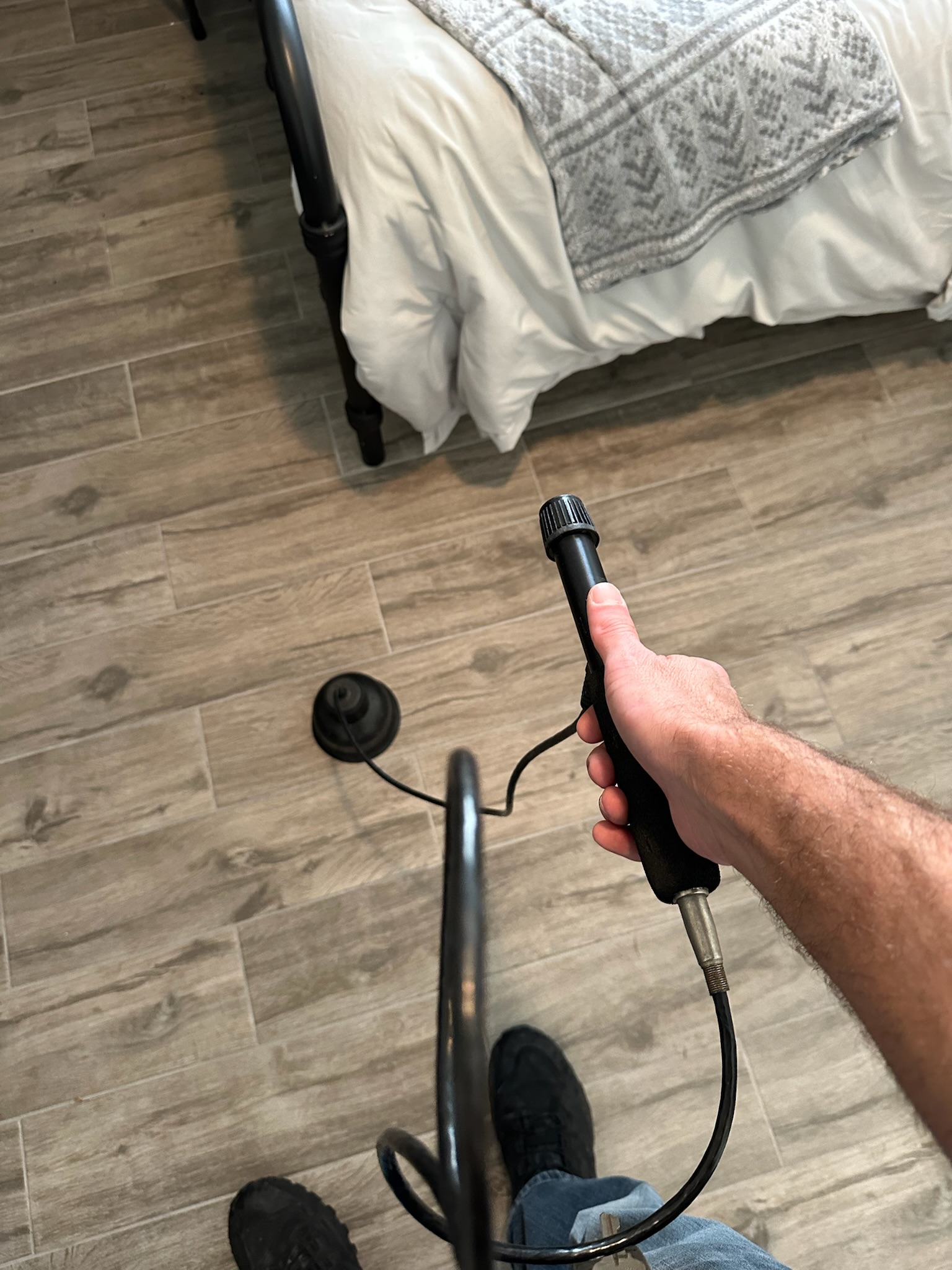
Many St. Petersburg underground and slab leaks ultimately trace back to supply line failures—including copper pipe leaks—but regardless of pipe material, the goal is the same: find the exact location with documentation, not assumptions.
Step 6: Leak Location Marked for Repair (Without Opening the Floor)
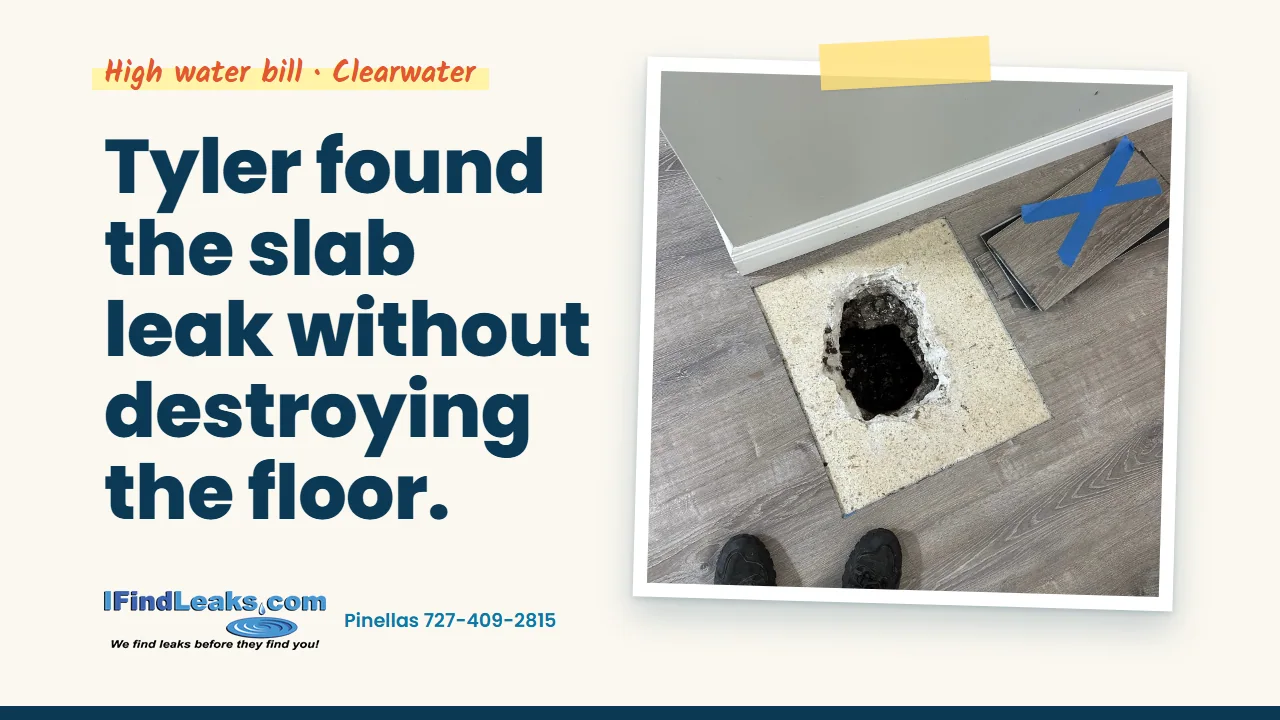
Once the leak was pinpointed, the exact location was marked on the floor with a clear blue “X.” This is the outcome homeowners want: precise leak location information that prevents unnecessary destruction.
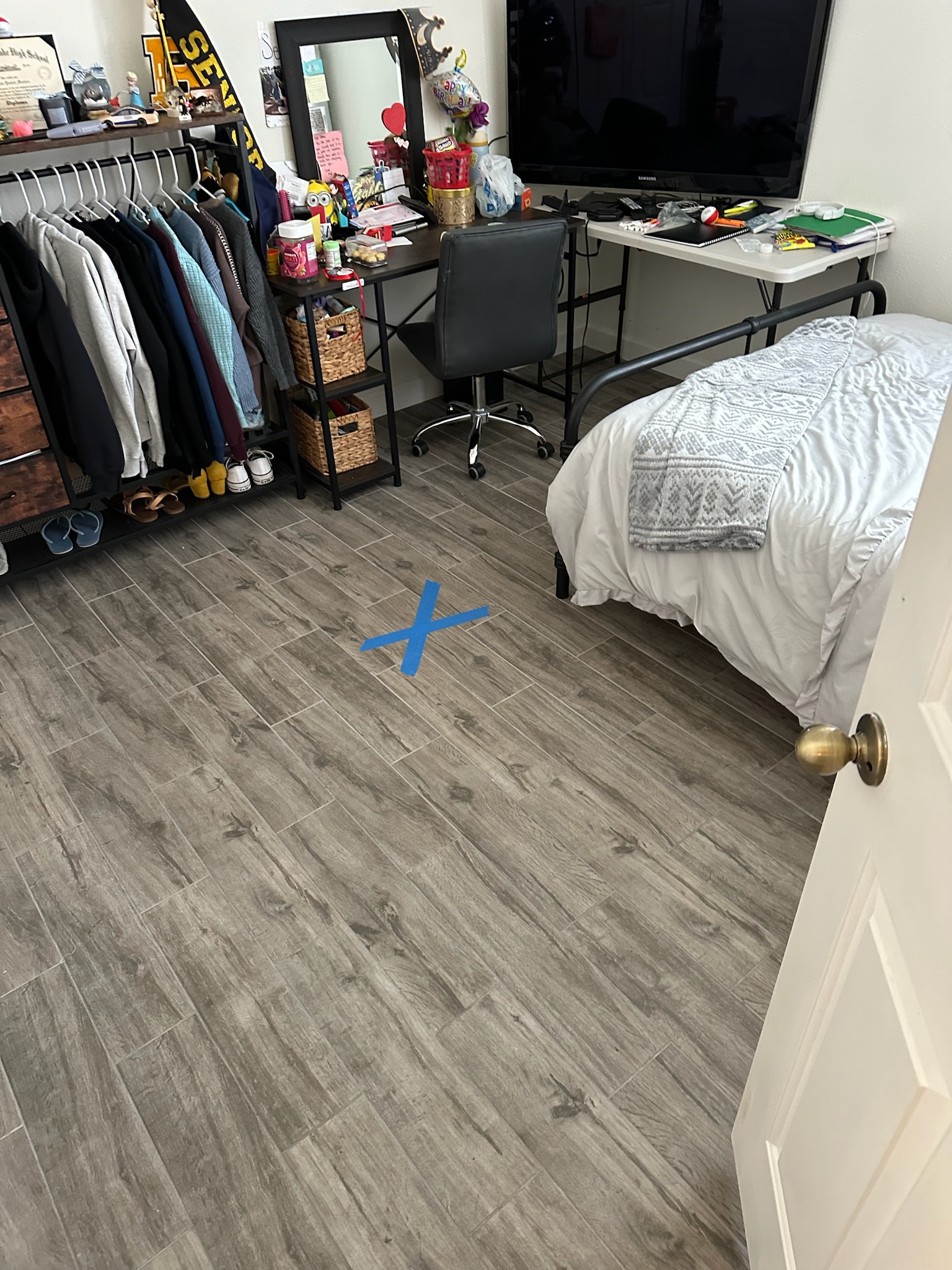
We do offer an access service if a homeowner wants us to open the floor or assist with locating access points, but a licensed plumber must still perform the pipe repair. In this case, the homeowner chose to wait because company was arriving, and they planned to schedule the repair the following week—while still having complete confidence in the exact leak location.
If You Have a High Water Bill in St. Petersburg, Don’t Let Someone “Search” Your Home
If your water bill spikes, or you suspect a slab leak, underground leak, water leak, or even a copper pipe leak, the right move is accurate leak detection first. Our specialty is pinpointing leaks so your home does not get destroyed by someone trying to find them.
To schedule professional leak detection with Tyler and the iFindLeaks team, visit iFindLeaks.com or call/text:
Call or Text: 727-409-2815
Whether you’re dealing with a St. Petersburg high-water bill, suspected slab leak detection, or hidden underground leaks, we’ll help you get certainty—fast, clean, and documented.
more jobs
More job stories about slab leaks.
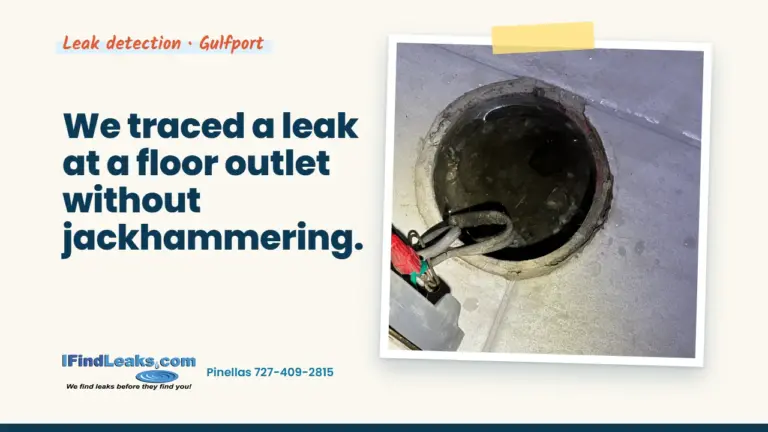
🚿 Gulfport Water Leak Detection: Floor Outlet Mystery Solved Without Jackhammering! 🔎
If you’re a homeowner in Gulfport, Florida — or nearby areas like St. Petersburg, South Pasadena, Treasure Island, or Pasadena Golf Club Estates — and you’ve…
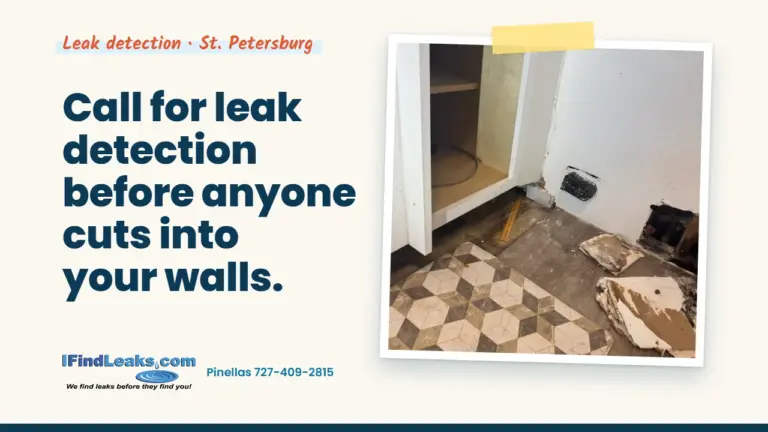
St Petersburg Water Leak Detection: Why You Should Call Us Before a Plumber Puts Holes in Your Walls
In South St. Petersburg, a homeowner recently learned a painful lesson in leak detection vs plumber decision-making: calling a plumber to find a hidden leak can…
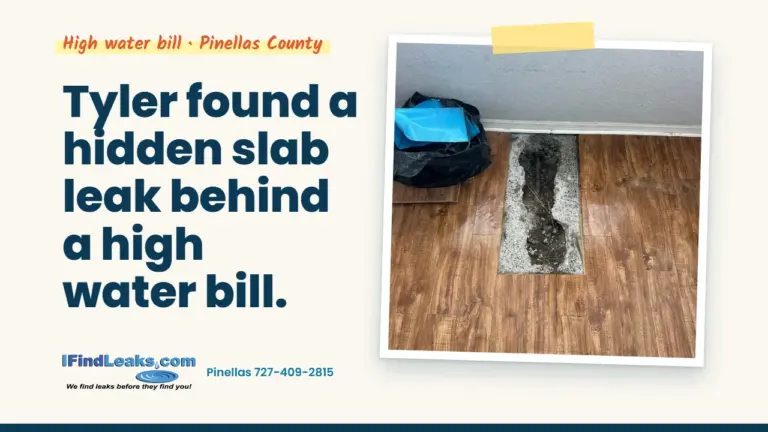
What Causes a High Water Bill in Pinellas County? Tyler Finds a Hidden Slab Leak
What causes a high water bill in Pinellas County? Sometimes the answer is simple: more irrigation, filling a pool, a running toilet, or a change in…