

A Clearwater high water bill can feel like a mystery at first. The house looks normal. There is no obvious water on the floor. No faucet is running. No toilet sounds stuck. But the bill keeps climbing, and somewhere under the home, water may be escaping nonstop.
That is exactly why homeowners call I Find Leaks. Our job is not to guess, tear up floors, or sell unnecessary repairs. Our job is to perform professional water leak detection, locate the source, document the findings, and help the homeowner move forward with confidence.
On this Clearwater job, Tyler — known as “The Leak Sniper” — had already located the source of the problem before the first photo was taken. The homeowner’s high water bill was being caused by a hidden slab leak under the floor. What matters here is not just that the leak was found. It is how cleanly and accurately the access was made after the leak was pinpointed.
This case is especially relevant for homeowners in Clearwater Beach, Sand Key, Island Estates, Downtown Clearwater, Harbor Oaks, Old Clearwater Bay, Glenwood, Skycrest, Morningside, Countryside, Coachman Ridge, Del Oro Groves, Greenbriar, Northwood, Seville, Imperial Cove, On Top of the World, and nearby Pinellas County neighborhoods where older plumbing, slab foundations, terrazzo, laminate flooring, and hidden copper pipe leaks can turn into expensive water usage problems.
Clearwater High Water Bill: Why a Slab Leak Is Often Hidden
When a water line leaks under a slab, the problem may not show up as a puddle right away. Water can move through soil, under terrazzo, beneath laminate flooring, or through voids in the slab before the homeowner sees visible damage. That is why a high water bill in Clearwater is often one of the first clues.
Common search terms homeowners use when this happens include Clearwater high water bill, high water bill Clearwater, Clearwater slab leak, slab leak detection Clearwater, underground water leak Clearwater, water leak detection Clearwater, copper pipe leak Clearwater, hidden water leak, and pinhole copper pipe leak. Those are the real-world problems this job demonstrates.
If your usage has not changed but your bill has jumped, start with professional high water bill help instead of letting someone randomly cut floors or walls. For Clearwater-specific help, visit our Clearwater high water bill service page.
Step 1: The Leak Was Located Before the Floor Was Opened
By the time this first photo was taken, Tyler had already pinpointed the slab leak location. A square section of laminate flooring had been carefully removed, exposing the terrazzo floor underneath. A wet paper towel was placed on the terrazzo before jackhammering to help control dust inside the customer’s home.
That may look simple, but it matters. Dust control, clean prep, and working directly over the leak location are the difference between a controlled access point and a destroyed room.
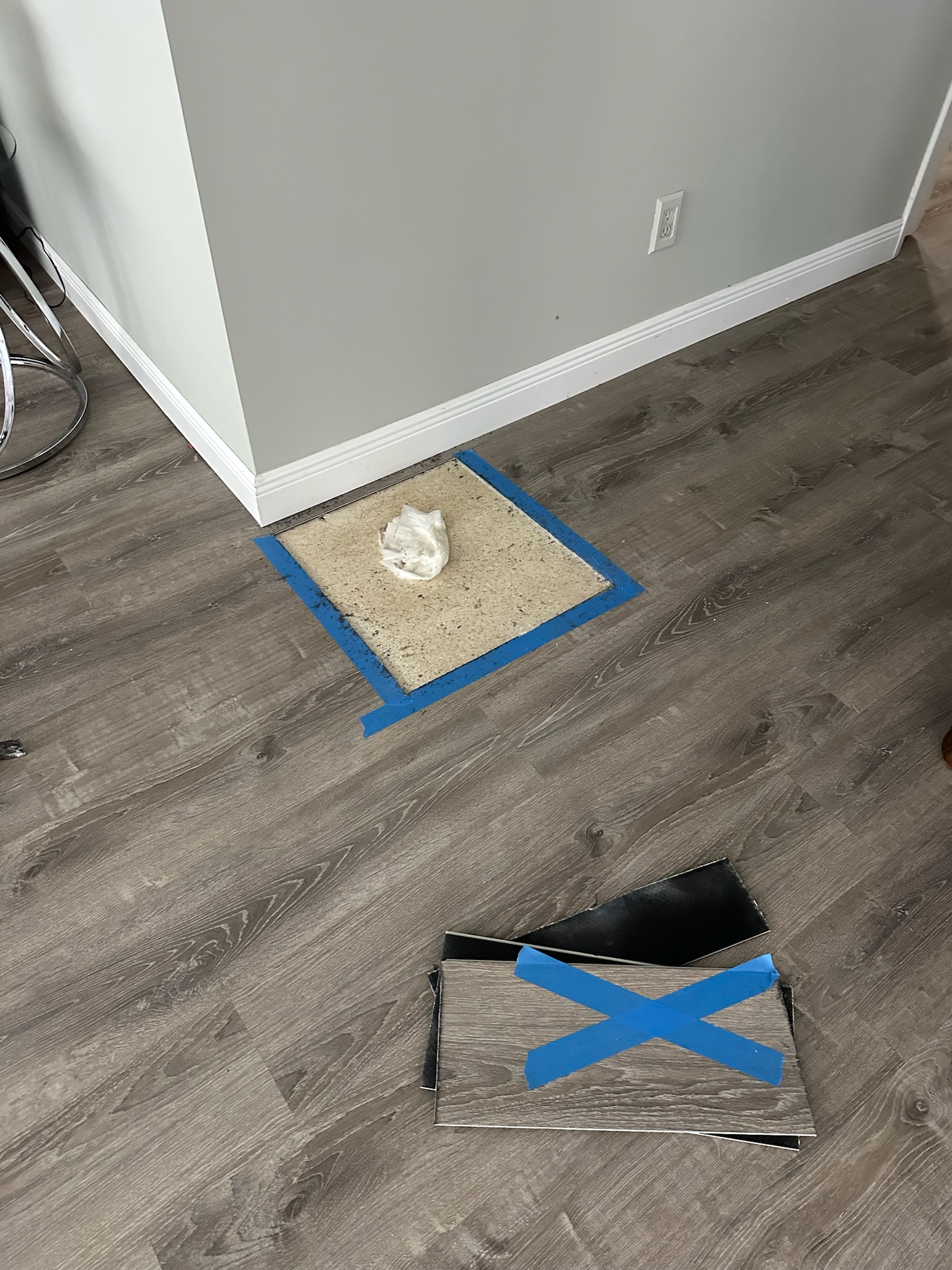
This is the point where proper slab and underground leak detection pays off. The leak has already been located. The floor is not being opened to search. It is being opened exactly where the evidence says the leak is located.
Step 2: Tools Staged for a Controlled Slab Leak Access
Next, Tyler staged his tools in the living room, including a Bosch jackhammer and the equipment needed to excavate the leak location. The removed laminate section and wet paper towel are visible in the background, showing that the work area was prepared before any concrete access began.
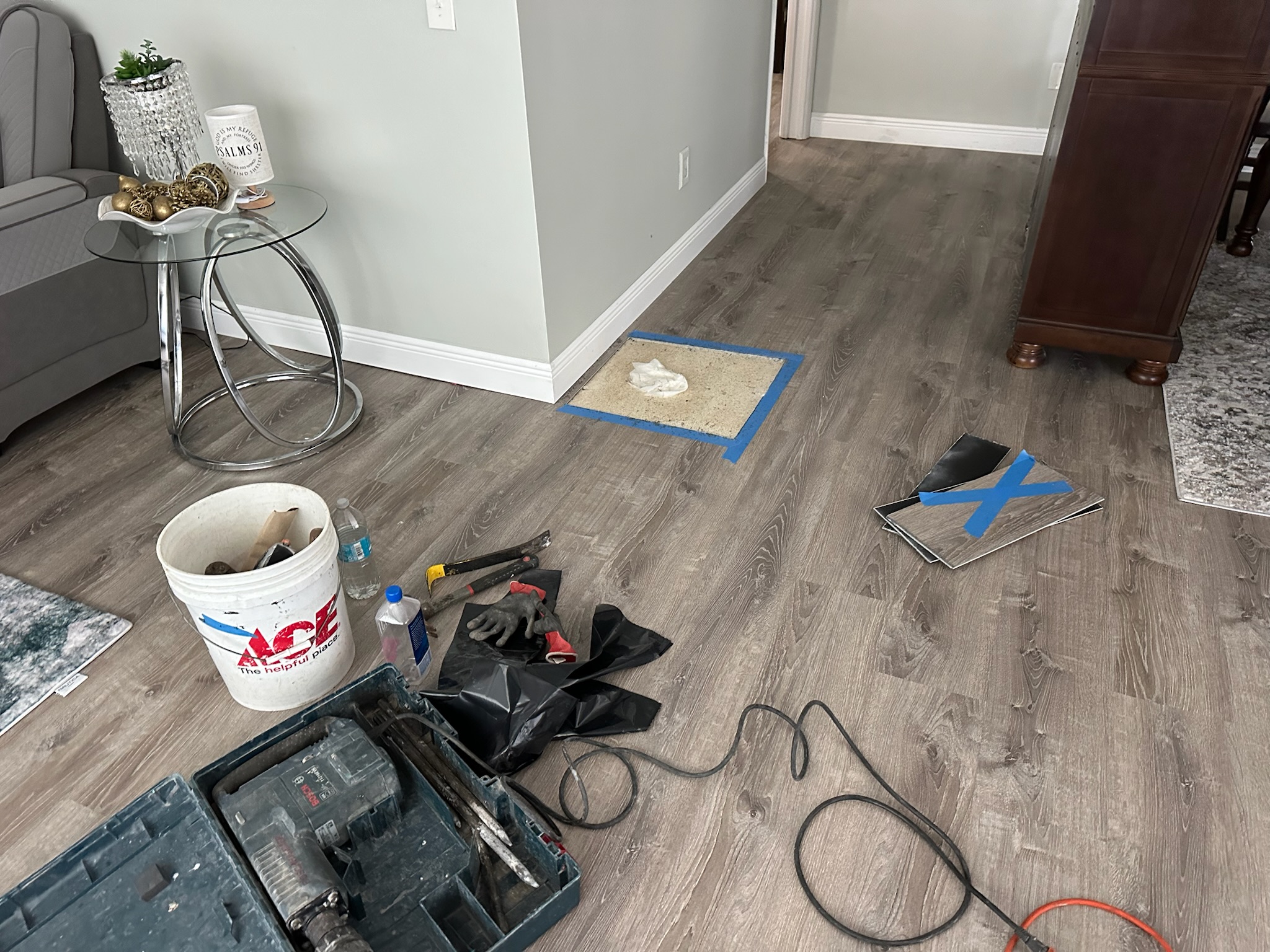
This is not a repair attempt. I Find Leaks does not perform permanent plumbing repairs. We locate the leak, document it, and when requested, we can provide access so a licensed plumber can repair the pipe. That separation matters because it keeps the focus on accurate leak detection rather than upselling plumbing work.
For related service information, see our pages for High Water Bill? No Leak?, thermal and electronic leak detection, and copper pipe leak detection.
Step 3: A Small, Clean Access Hole Directly Over the Leak
After the leak was marked with a blue X, Tyler opened the terrazzo floor directly over the confirmed location. There is no dust cloud, no scattered debris, and no random exploratory damage. The access point is small because the location was known before the floor was opened.
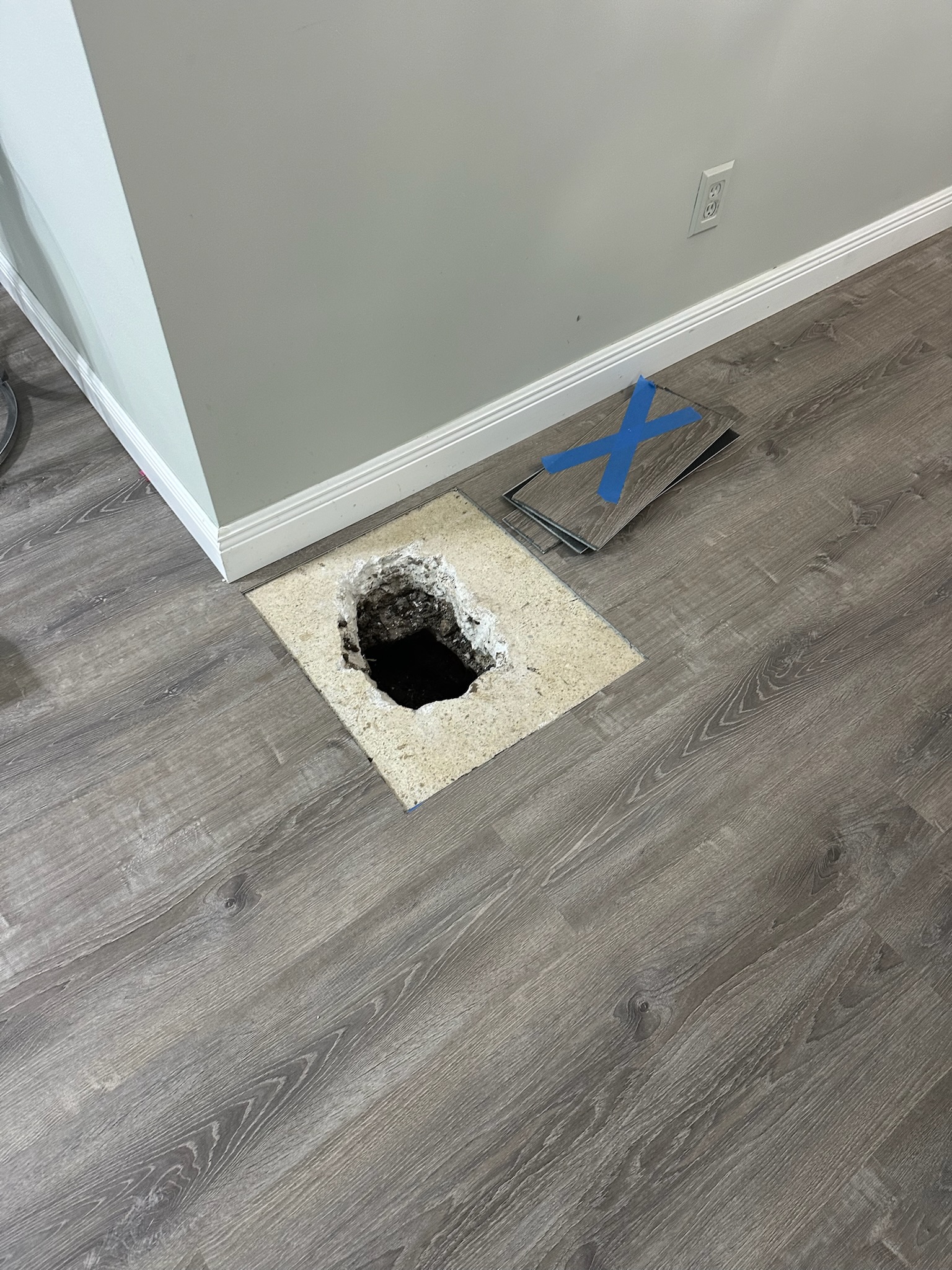
This is the main point homeowners should understand: moisture, hot spots, and high water usage tell part of the story, but the value of professional leak detection is narrowing the problem to a specific location before anyone starts breaking concrete.
Step 4: A Better Look at the Clean Terrazzo Access
This top-down photo gives a better view of the workmanship. The laminate floor was cut cleanly and set aside. The terrazzo access point is controlled. There is no visible dust or dirt spread across the room. For a homeowner dealing with a stressful Clearwater high water bill, this is exactly the kind of controlled process you want.
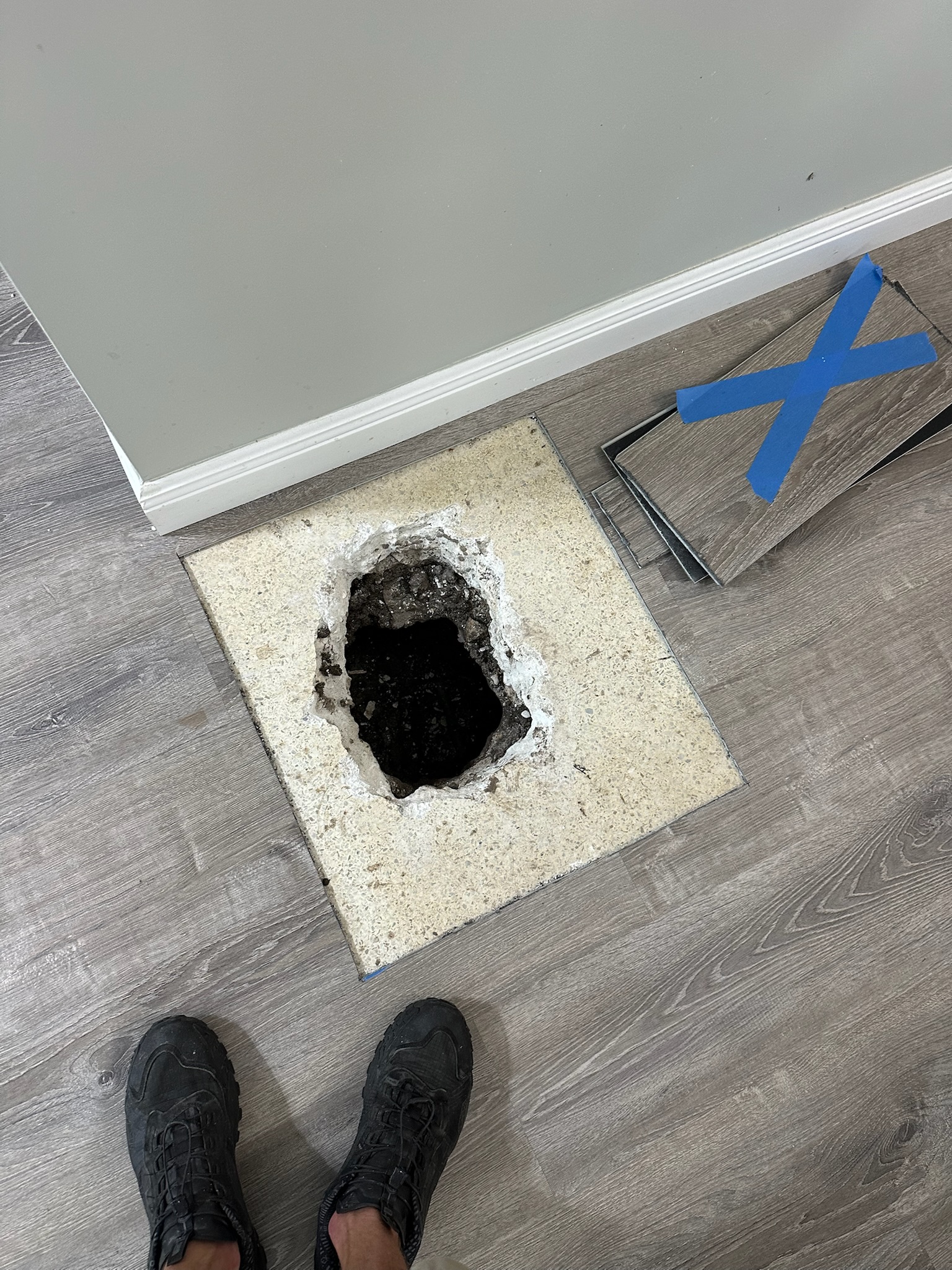
Whether the home is in Countryside, Morningside, Sand Key, Island Estates, Del Oro Groves, or near Downtown Clearwater, the goal is the same: find the hidden water leak accurately and avoid turning the home into a construction zone.
Step 5: The Cause of the High Water Bill — A Copper Pipe Pinhole Leak
Once the access was made, the problem was confirmed: a small pinhole leak in a copper pipe beneath the slab. This is the kind of leak that can run continuously and quietly, sending water usage up without obvious surface damage.
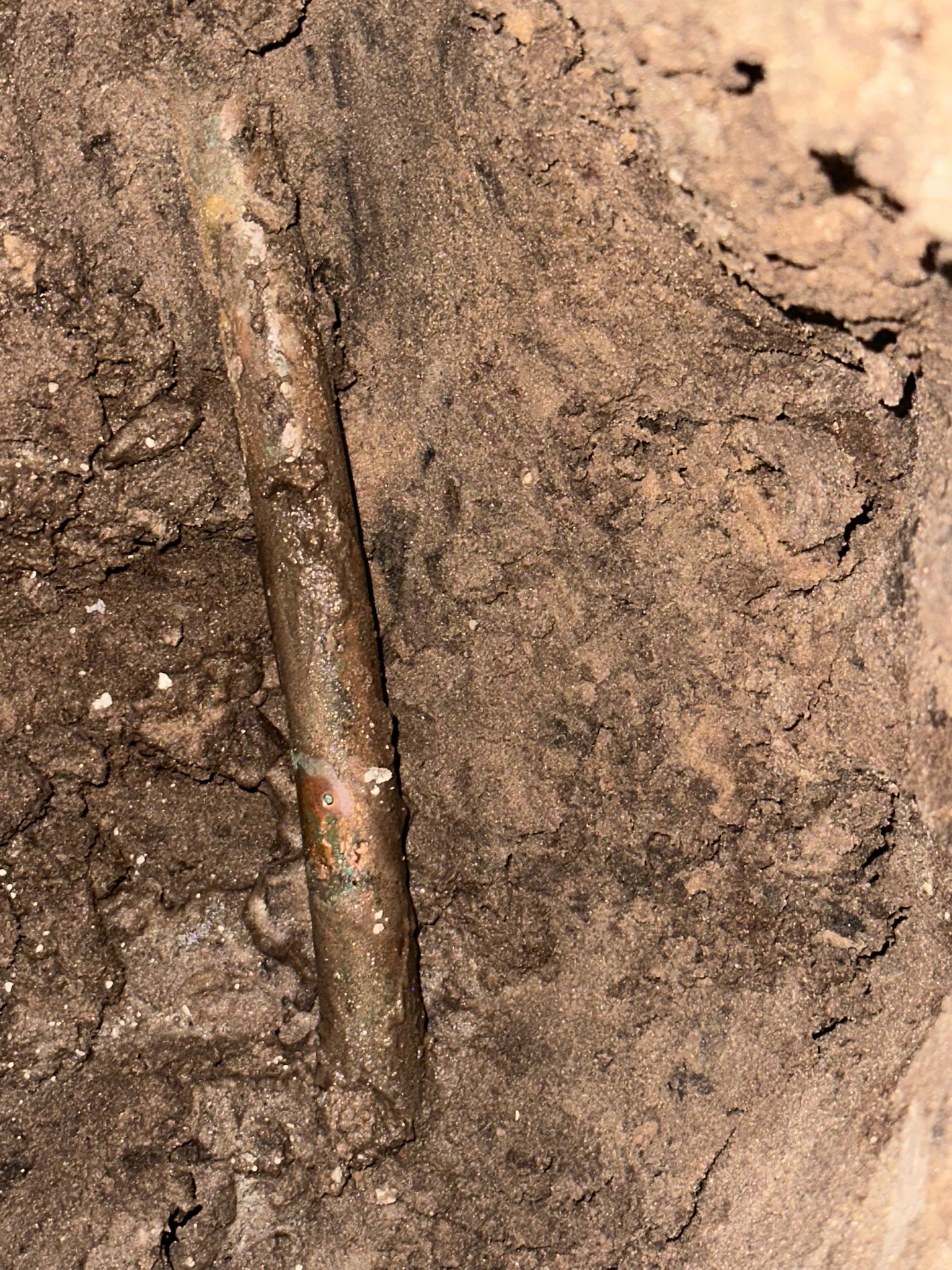
Copper pipe leaks can be difficult to see until the pipe is exposed. A tiny opening can waste a surprising amount of water over time. That is why a sudden high water bill, warm floor area, sound of running water, or unexplained meter movement should be investigated quickly.
For more examples of local work and documentation, visit our leak detection photos, jobs blog, and Pinellas County leak detection page.
Step 6: Temporary Clamp Installed Until the Plumber Repairs the Pipe
After the copper pipe leak was exposed, Tyler installed a temporary clamp using a small rubber patch and hose clamp. This is not a permanent repair. It is temporary stabilization to help stop water loss until a licensed plumber can perform the actual plumbing repair.
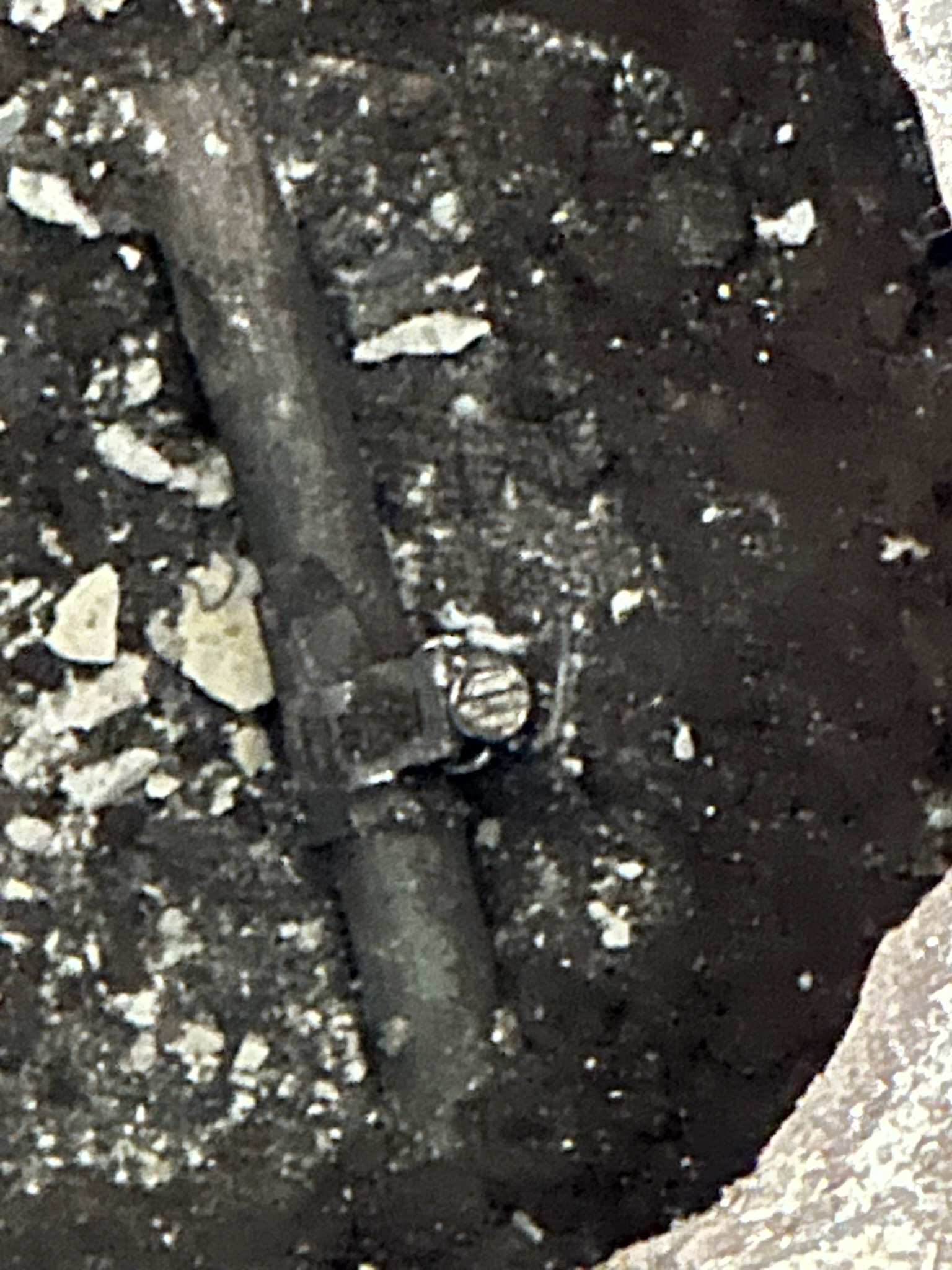
When conditions allow, we do not charge extra to place a temporary clamp before the plumber arrives. It is simply a courtesy to help the homeowner reduce water loss and keep using the water until the licensed plumbing repair is completed.
Again, I Find Leaks does not perform permanent plumbing repairs. We locate the leak. We document it. We can expose it if requested. The pipe repair itself belongs to a licensed plumber.
What Clearwater Homeowners Should Do After a High Water Bill
If your Clearwater utility bill is unusually high, start by checking obvious usage first: running toilets, irrigation, hose bibs, pool fill activity, water softeners, and visible dripping fixtures. If nothing explains the spike, the issue may be a hidden water leak, slab leak, underground leak, or copper pipe leak.
The City of Clearwater provides a helpful public resource called Find and Fix Leaks at Home. Clearwater utility customers can also visit Clearwater Public Utilities for public utility information and billing contacts.
If your service is through Pinellas County Utilities, review the county’s Water Leak Resources, High Water Bill Check Sheet, Leak Adjustment Request, Statement of Repaired Leak, and Water Billing Payment Options.
Those utility resources are helpful after the leak is found and repaired, but the first step is often locating the actual leak. That is where I Find Leaks comes in.
Why This Case Matters
This Clearwater job shows the full value of professional leak detection:
- The high water bill was investigated.
- The slab leak was pinpointed before excavation.
- The laminate was removed cleanly.
- The terrazzo was opened in one controlled location.
- The copper pipe pinhole leak was confirmed.
- A temporary clamp helped stop water loss until the plumber could repair the pipe.
That is the difference between finding the leak and destroying the home trying to find it.
Helpful I Find Leaks Pages for Clearwater and Pinellas County Homeowners
For more information about our services, start with these I Find Leaks resources:
- I Find Leaks Home
- Clearwater High Water Bill Help
- High Water Bill Help
- High Water Bill? No Leak?
- Water Leak Detection
- Slab and Underground Leak Detection
- Copper Pipe Leak Detection
- Thermal and Electronic Leak Detection
- Pinellas County Leak Detection
- About I Find Leaks
- Customer Reviews
- Leak Detection Photos
- Leak Detection Jobs Blog
- Contact Our Leak Detection Team
If your problem turns out to involve sewer odor, drain line issues, or post-storm sewer concerns instead of a pressurized water leak, you can also review our sewer odor detection, sewer pipe inspection, high-pressure sewer jetting, and post-hurricane sewer pipe inspection pages.
Call I Find Leaks for a Clearwater High Water Bill or Slab Leak
If you are in Clearwater, Clearwater Beach, Sand Key, Island Estates, Countryside, Morningside, Del Oro Groves, Coachman Ridge, Downtown Clearwater, Harbor Oaks, Greenbriar, Skycrest, Northwood, or anywhere nearby in Pinellas County and you are dealing with a high water bill, suspected slab leak, underground water leak, copper pipe leak, or hidden water leak, do not wait for the damage to become obvious.
Let Tyler “The Leak Sniper” and the I Find Leaks team locate the source first, document the problem, and help you avoid unnecessary destruction.
Call or text I Find Leaks: 727-409-2815
Or visit our contact page to schedule leak detection service.