
When a homeowner in St. Petersburg walked into a child’s room and found the carpet soaking wet, the first concern was obvious: where is the water coming from, and how much damage is already hidden?
This is exactly the kind of situation where professional St. Petersburg leak detection matters. Wet carpet does not always mean the leak is directly under the wet spot. Water can travel under base plates, behind drywall, along flooring, through sleeves, and around framing before it finally becomes visible inside the room.
On this job, Tyler — known as “The Leak Sniper” — used infrared leak detection, pipe tracing, one targeted wall opening, and ultrasonic leak detection to find the source without tearing the room apart.
If you are searching for leak detection in St. Petersburg, water leak detection St. Petersburg, hidden water leak help, wet carpet leak detection, copper pipe leak detection, slab leak detection, or high water bill help in St. Petersburg, this real job shows why you should locate the leak before anyone starts cutting.
Why Wet Carpet in a St. Petersburg Home Does Not Always Show the Leak Location
A common mistake is assuming the leak must be directly under the wet carpet. That can happen, but it is not guaranteed. Water follows gravity, framing, flooring seams, base plates, pipe sleeves, and hidden openings. By the time the homeowner sees wet carpet, the original water leak may be several feet away or even on the opposite side of a wall.
That is why I Find Leaks starts with evidence. Our job is to locate and document the source. We do not perform permanent plumbing repairs. Once the leaking pipe is exposed and verified, a licensed plumber handles the pipe repair.
This distinction is important. Plumbers are trained to repair plumbing. Leak detection is the specialized process of finding the hidden leak accurately before unnecessary walls, floors, cabinets, or baseboards are removed.
Step 1: Tyler Starts With Infrared Leak Detection in the Child’s Room
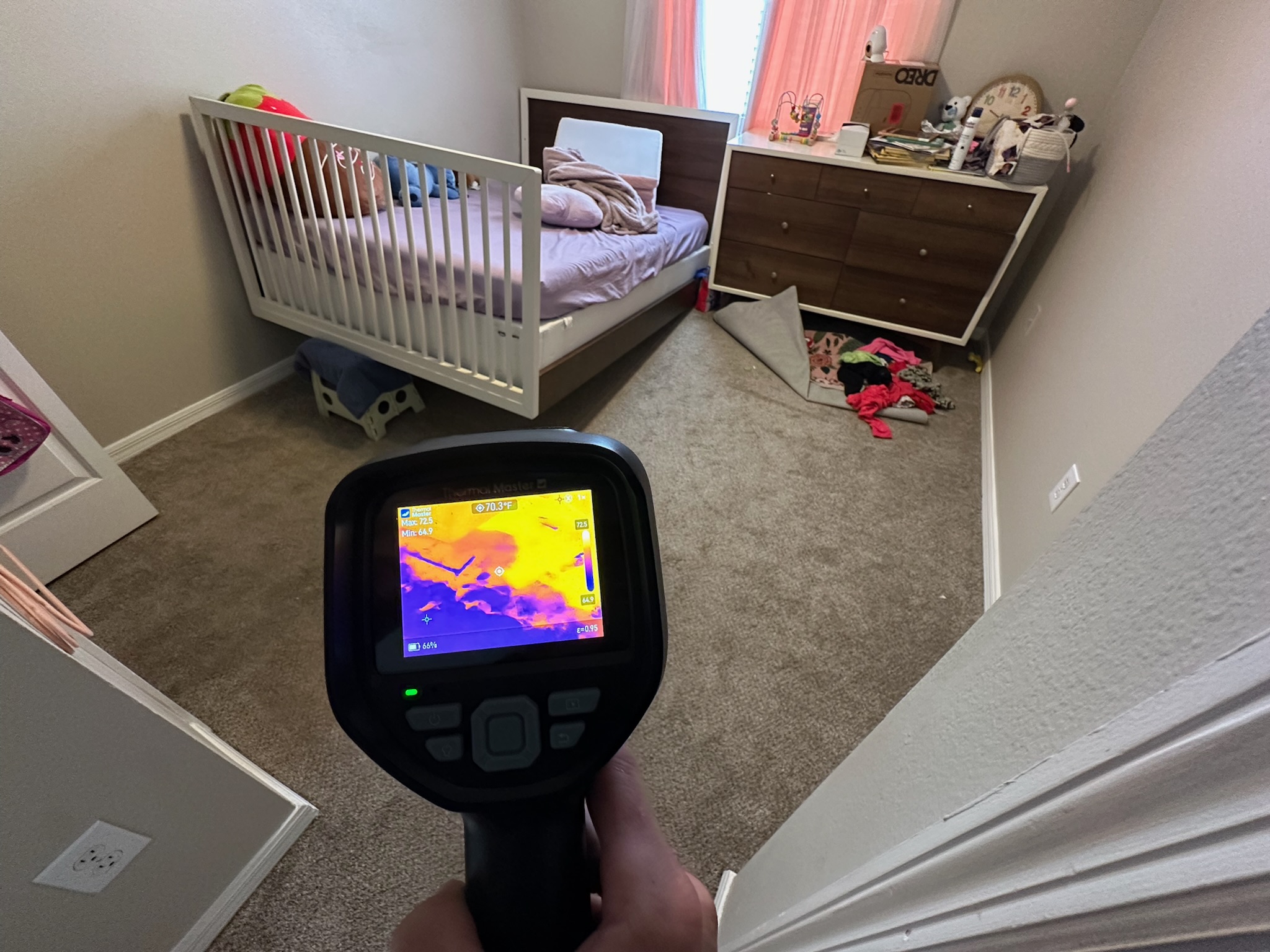
The first image shows Tyler using an infrared camera inside a small child’s room. The homeowner had found the carpet soaking wet, but there was no obvious pipe spraying water, no open fixture running, and no clear source visible from the room.
Instead of tearing out carpet, moving furniture, or cutting the wall immediately, Tyler used thermal imaging to look at the moisture pattern. The infrared camera screen showed a defined water line in the carpet, giving him a starting point without touching anything.
This is one of the reasons homeowners call I Find Leaks for St. Petersburg leak detection. The goal is not to guess. The goal is to read the evidence first.
Step 2: Tracking the Water Pattern Toward the Closet and Wall
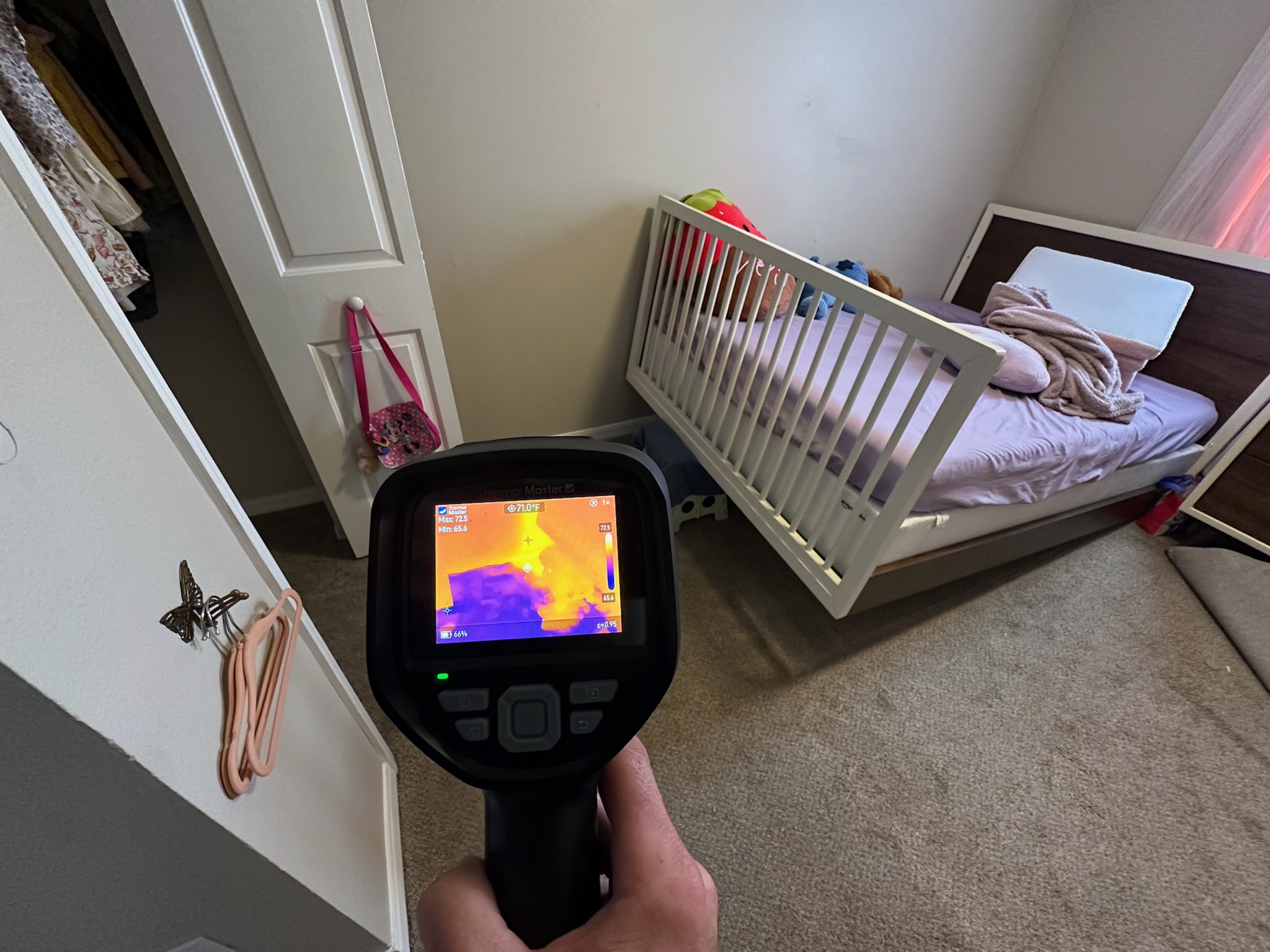
Next, Tyler continued scanning the room and followed the moisture pattern toward the closet and wall area. The closet was open, and the room still looked like a normal child’s bedroom — which is exactly why non-invasive testing is so valuable.
At this stage, Tyler was trying to determine whether the water was coming from inside the wall, traveling from under the floor, or entering the carpet from another hidden path. No cutting had been done. No demolition had started. He was still observing and narrowing the possibilities.
This is the difference between professional water leak detection and simply opening walls to “see what happens.” Moisture tells a story, but you have to follow it carefully.
Step 3: Checking the Other Side of the Wall
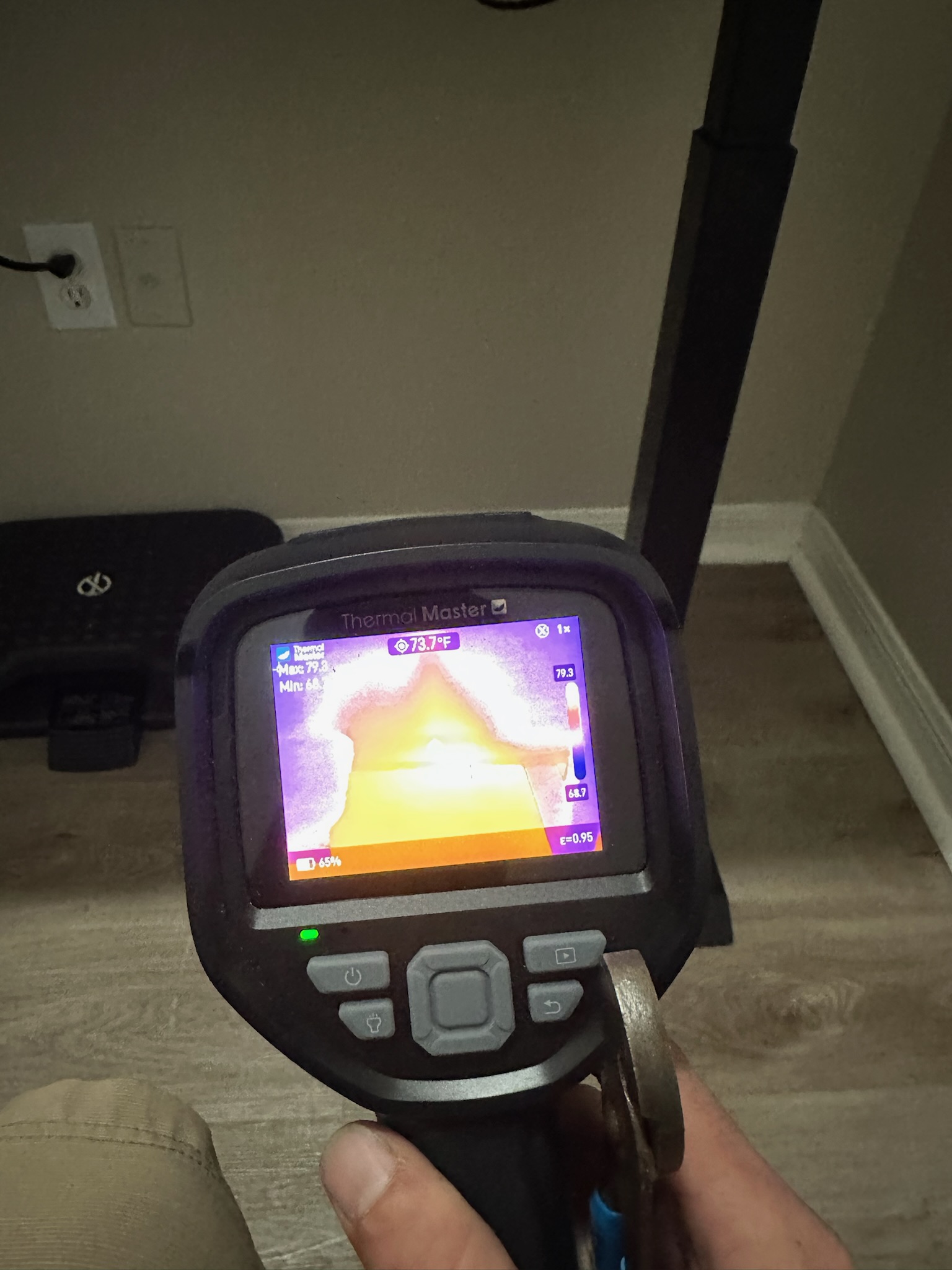
The next step was to inspect the other side of the wall. On that side, there was laminate-style flooring and a TV stand. There was no obvious standing water on the floor, but that did not rule out a hidden leak.
Tyler scanned the wall and floor area with infrared to compare both sides of the wall. This helps determine whether moisture is isolated to the child’s room, traveling through the wall, or coming from a pipe route hidden inside the wall cavity.
In St. Petersburg homes, this matters because plumbing routes can be hidden in walls, under slabs, behind bathrooms, near laundry rooms, or behind finished living spaces. Homes in Shore Acres, Snell Isle, Historic Old Northeast, Crescent Lake, Historic Kenwood, Euclid-St. Paul, Greater Woodlawn, Allendale, Disston Heights, Tyrone, Coquina Key, Greater Pinellas Point, Riviera Bay, Venetian Isles, Placido Bayou, Jungle Terrace, and Downtown St. Petersburg can all have different construction styles, remodel histories, and pipe materials.
For official neighborhood resources, the City of St. Petersburg maintains a Neighborhood Relations page with city neighborhood information and resources.
Step 4: One Targeted Wall Cut Reveals the Copper Pipes
After infrared testing and pipe tracing, Tyler made one targeted cut in the drywall. Inside the wall, he found exactly what the investigation pointed toward: copper plumbing pipes joined together in the wall.
This is the moment where the value of proper leak detection becomes visible. The wall was not opened randomly. The cut was made after the water pattern and pipe route were narrowed down.
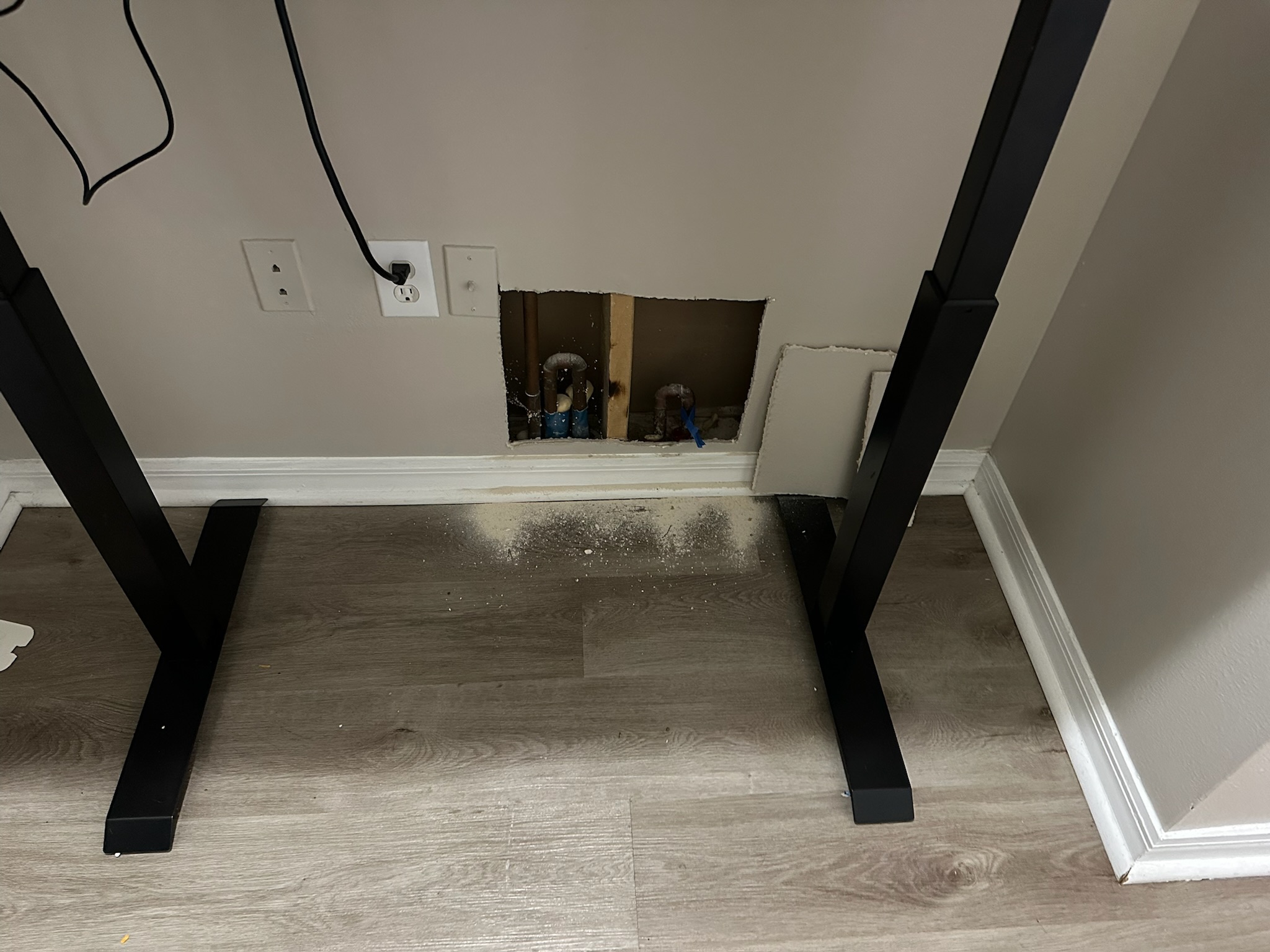
Copper pipe leaks are common enough in older St. Petersburg homes that they should always be considered when there is unexplained wet carpet, moisture near baseboards, water under flooring, or a rising utility bill. For more on this specific issue, visit our copper pipe leak detection page.
Step 5: Ultrasonic Leak Detection on the Copper Pipe Manifold
With the copper pipes exposed, Tyler used an ultrasonic leak detection device to listen directly on the pipe. This type of equipment can detect sound frequencies that the human ear cannot reliably hear.
When pressurized water escapes through a small opening, it can create a high-frequency signal. Ultrasonic testing helps isolate which pipe is producing that signal. That is especially important when multiple copper pipes are grouped together in a wall.
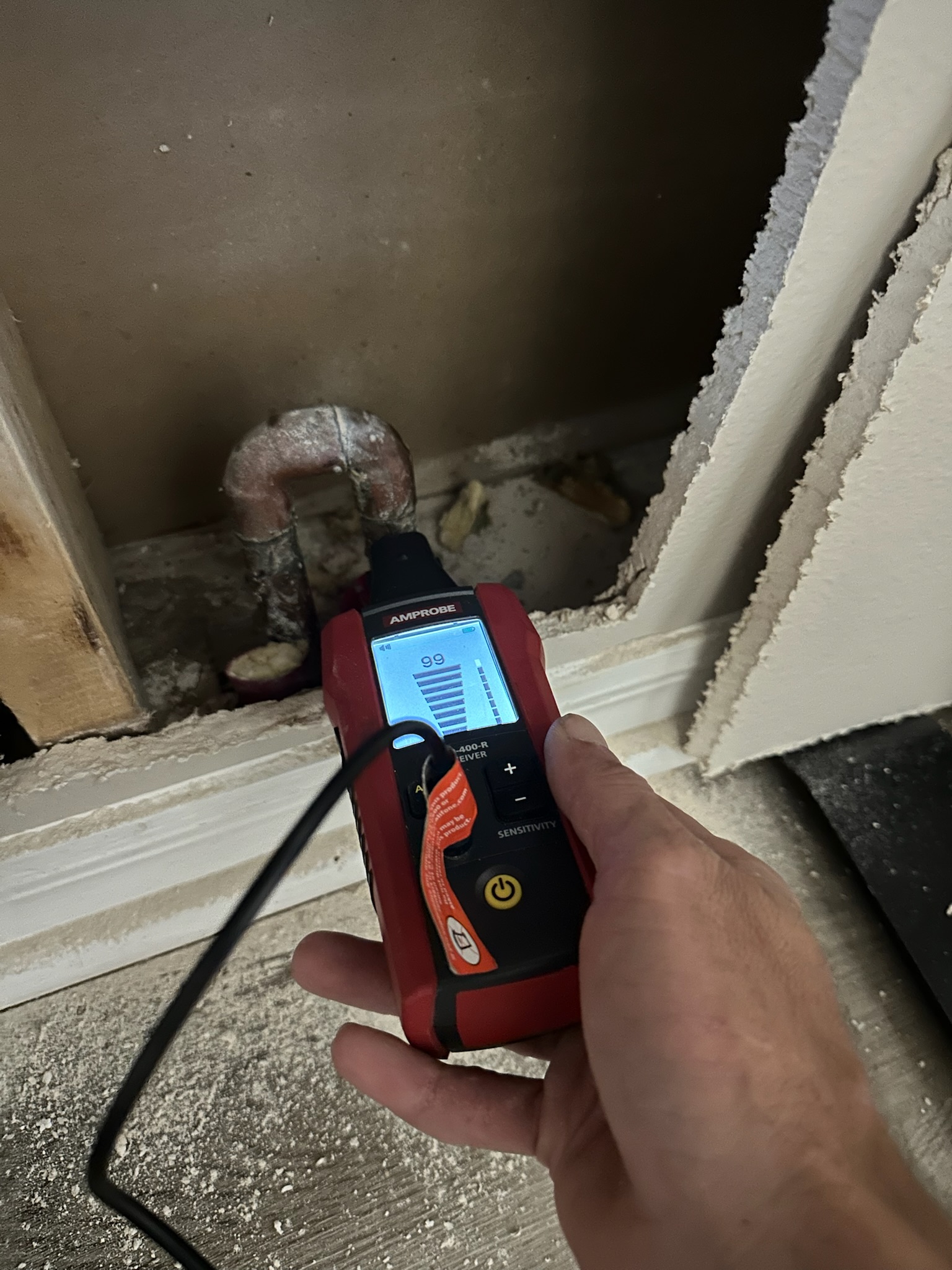
This is why a wet carpet leak should not be handled by guesswork. Infrared can show moisture patterns. Pipe tracing can help identify pipe routes. Ultrasonic testing can help identify the leak signal. Together, those tools reduce unnecessary damage and help confirm the actual source.
To learn more about our methods, see our thermal and electronic leak detection, water leak detection, and slab and underground leak detection pages.
Step 6: The Leak Was Found Inside a Red Protective Pipe Sleeve
The final image shows the actual source. A copper pipe was leaking inside the wall where it passed through a red protective sleeve. That sleeve is intended to protect the pipe from surrounding concrete and building materials, but in this case the sleeve had been filled with spray foam.
Water collected inside the sleeve, then dribbled downward beneath the base plates and traveled under the floor. That is how the child’s room carpet became soaking wet even though the leak was not obvious from the carpet alone.
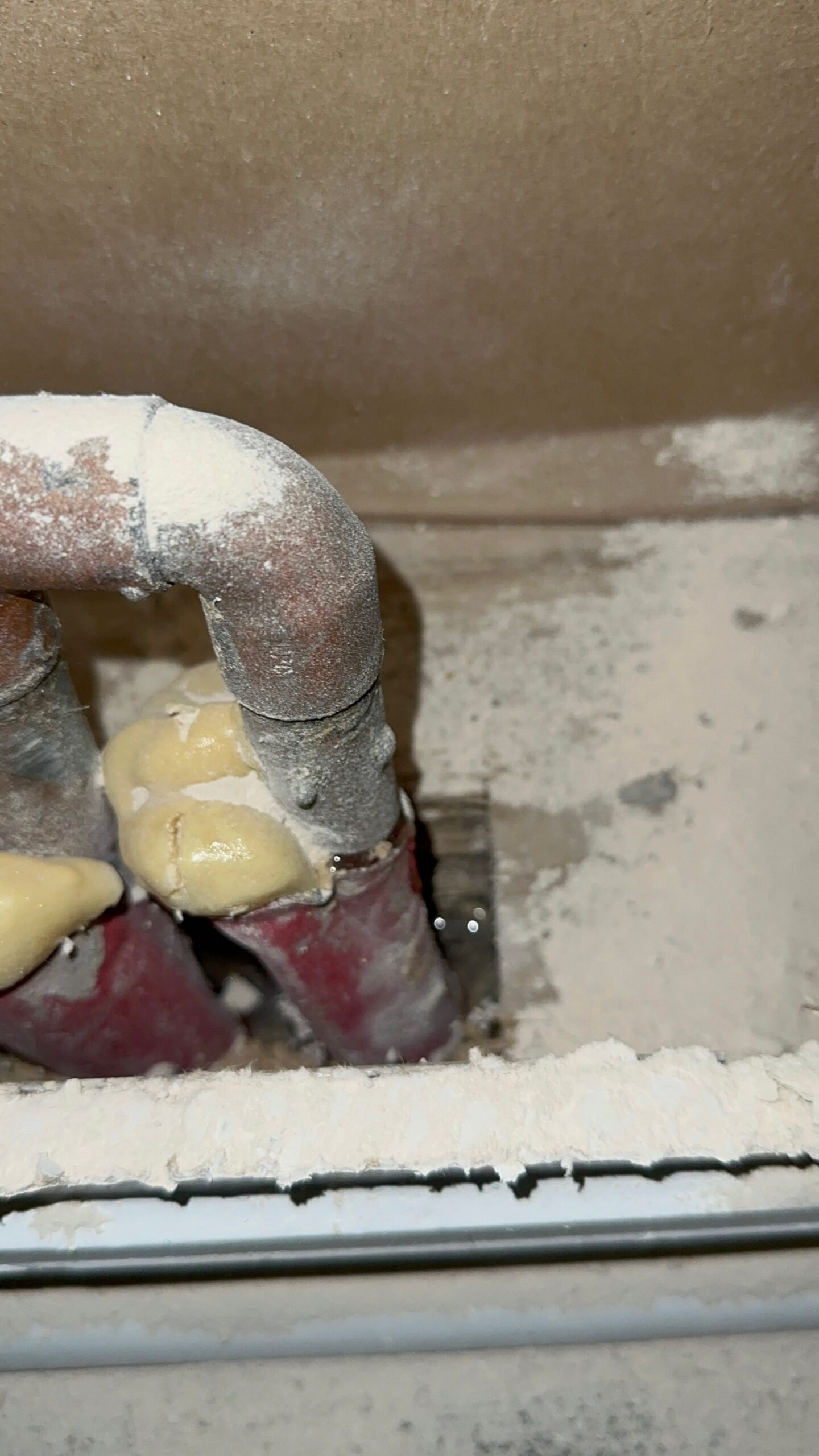
This is the result homeowners are paying for: one targeted drywall cut, copper pipes exposed exactly where expected, ultrasonic confirmation, and the actual leak source documented.
Why This St. Petersburg Leak Detection Job Matters
This job shows the difference between “looking for a leak” and pinpointing a leak. Tyler did not tear apart the child’s room. He did not cut multiple holes across the home. He followed the evidence.
- Wet carpet was identified in the child’s room.
- Infrared leak detection showed the moisture pattern.
- The water path was followed toward the closet and wall.
- The opposite side of the wall was checked.
- A pipe tracer was used before drywall access.
- One targeted wall cut exposed the copper pipe route.
- Ultrasonic leak detection isolated the leaking pipe.
- The copper pipe leak was confirmed inside the red sleeve.
That process protects the home, saves time, and gives the licensed plumber a clear repair target.
Common Signs You May Need Leak Detection in St. Petersburg
Call a leak detection specialist if you notice any of the following:
- Wet carpet or damp flooring with no visible source
- High water bill from St. Petersburg Utilities or Pinellas County Utilities
- Water stains near baseboards or walls
- Musty smells, mildew, or recurring damp spots
- Warm spots on floors that may suggest a hot water line issue
- Sound of running water when fixtures are off
- Moisture appearing after a remodel, plumbing change, or storm event
- Suspected copper pipe leak, slab leak, or underground water leak
For high-water-bill cases, visit our high water bill help page or our St. Petersburg high water bill page.
Helpful St. Petersburg and Pinellas County Utility Resources
If you have a leak, documentation may matter for utility billing review or adjustment requests. I Find Leaks helps locate and document the leak, but the city or county determines whether a bill adjustment applies.
For City of St. Petersburg utility customers, useful resources include:
- City of St. Petersburg Water Services
- City of St. Petersburg Utility Billing and Leak Adjustments
- St. Pete Service Center
- City of St. Petersburg Neighborhood Relations
For Pinellas County Utilities customers, useful resources include:
- Pinellas County Water Leak Resources
- Pinellas County High Water Bill Check Sheet
- Pinellas County Leak Adjustment Request
- Pinellas County Water FAQs
These resources are helpful after the leak is found, but the first step is getting the leak located accurately.
St. Petersburg Areas We Serve for Leak Detection
I Find Leaks provides leak detection throughout St. Petersburg and surrounding Pinellas County communities. We regularly help homeowners near Downtown St. Petersburg, Central Avenue, the St. Pete Pier, the Dali Museum, Sunken Gardens, Vinoy Park, Tropicana Field, Historic Old Northeast, Snell Isle, Shore Acres, Crescent Lake, Historic Kenwood, Allendale, Greater Woodlawn, Euclid-St. Paul, Disston Heights, Tyrone, Jungle Terrace, Jungle Prada, Pasadena, Gulfport, Coquina Key, Greater Pinellas Point, Lakewood Estates, Maximo, Bayou Highlands, Riviera Bay, Placido Bayou, Venetian Isles, and Weedon Island Preserve.
For broader local coverage, visit our Pinellas County leak detection page or our Shore Acres water leak detection category.
Internal Resources From I Find Leaks
If you are researching your leak before calling, these pages may help:
- I Find Leaks Home
- St. Petersburg Leak Detection
- Water Leak Detection
- Slab and Underground Leak Detection
- Copper Pipe Leak Detection
- Thermal and Electronic Leak Detection
- High Water Bill Help
- High Water Bill? No Leak?
- Leak Detection Photos
- Leak Detection Job Blog
- Customer Reviews
- About I Find Leaks
- Contact I Find Leaks
FAQ: St. Petersburg Leak Detection
Can wet carpet be caused by a leak inside a wall?
Yes. Water can travel from a leaking pipe inside a wall, down behind base plates, and under flooring before it appears as wet carpet. That is why checking only the wet area is not enough.
Do you have to cut walls to find a hidden water leak?
Not always. We start with non-invasive methods such as infrared imaging, pipe tracing, and acoustic or ultrasonic testing. If an access point is needed, the goal is to make one targeted opening instead of multiple exploratory holes.
Can I Find Leaks repair the pipe?
No. I Find Leaks does not perform permanent plumbing repairs. We locate and document the leak. A licensed plumber performs the pipe repair once the source has been found.
Can a copper pipe leak cause a high water bill?
Yes. A copper pipe leak can waste water continuously, especially when it is hidden inside a wall, under a slab, or beneath flooring. Even a small leak can become expensive if it runs long enough.
Do you provide leak detection in Shore Acres, Snell Isle, Old Northeast, and Historic Kenwood?
Yes. I Find Leaks provides water leak detection throughout St. Petersburg and nearby Pinellas County areas, including Shore Acres, Snell Isle, Historic Old Northeast, Historic Kenwood, Jungle Terrace, Greater Pinellas Point, Placido Bayou, Riviera Bay, Coquina Key, and surrounding St. Pete neighborhoods.
What should I do if I have a high water bill in St. Petersburg?
Check obvious fixtures first, including toilets, hose bibs, irrigation, water softeners, and pool fill lines. If nothing explains the water usage, call for professional leak detection before opening walls or floors.
Call I Find Leaks for St. Petersburg Leak Detection
If you have wet carpet, unexplained moisture, a high water bill, a suspected slab leak, an underground water leak, or a copper pipe leak in St. Petersburg, do not let someone destroy the house trying to find it.
Let Tyler “The Leak Sniper” and the I Find Leaks team locate the source first.
Call or text I Find Leaks: 727-409-2815
Or visit our contact page to schedule St. Petersburg leak detection service.